

What happens when customers stop clicking your website the way they used to? In 2026, that question is becoming very real for online stores. Search engines, AI assistants, shopping feeds, and answer engines are changing how people discover products. Instead of visiting multiple websites, users are increasingly getting product recommendations, comparisons, pricing details, and buying guidance directly inside AI-generated results. That is exactly why Zero-Click AI Shopping is becoming one of the most important shifts in e-commerce.
For online brands, this is not just another trend to watch from a distance. It is a direct change in how visibility, trust, and conversions are earned. If your product pages are unclear, poorly structured, slow, or missing key information, AI systems may skip your store entirely and surface a competitor instead. To stay visible, businesses now need to prepare their storefronts not only for human shoppers, but also for AI systems that interpret product data, summarize value, and influence buying decisions before a click even happens.
This is where smart preparation matters. Brands that adapt early can turn Zero-Click AI Shopping into an advantage by improving product content, structured data, trust signals, and overall storefront clarity. In this guide, you will learn how to prepare your e-commerce storefront for this new shopping behavior, what changes matter most in 2026, and how businesses can stay discoverable, competitive, and conversion-ready in an AI-first buying journey.
What Is Zero-Click AI Shopping?
Zero-Click AI Shopping is the shift where shoppers get product answers, recommendations, and buying guidance directly from AI-powered search results, shopping assistants, and answer engines without needing to visit multiple websites first. Instead of clicking through five different stores, users now ask AI tools to compare products, summarize features, explain price differences, and recommend the best option.
That changes the role of your website.
Your storefront is no longer just a place where customers land and browse. In Zero-Click AI Shopping, your storefront also becomes a source of product intelligence. AI systems read your product pages, pricing clarity, reviews, descriptions, shipping information, structured data, and brand trust signals to decide whether your store deserves visibility in AI-generated shopping journeys.
For e-commerce businesses, this means one thing: your storefront must be ready to communicate clearly to both humans and machines. If your product information is vague, thin, outdated, or inconsistent, Zero-Click AI Shopping can reduce your visibility. But if your content is structured, trustworthy, and conversion-focused, Zero-Click AI Shopping can actually expand your reach.
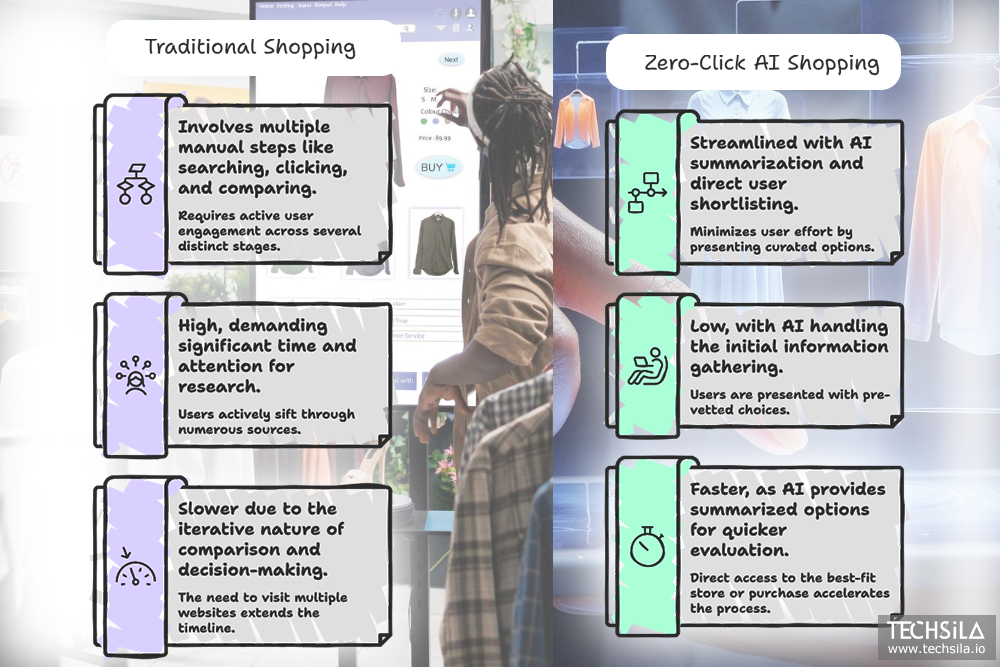
Why Zero-Click AI Shopping Matters for E-Commerce in 2026
In 2026, shoppers expect speed, relevance, and clarity. They do not want to dig through cluttered product pages just to find basic details like delivery time, return policy, material quality, compatibility, or best-use cases. Zero-Click AI Shopping meets that expectation by surfacing answers earlier in the decision-making process.
This creates both a challenge and an opportunity.
The challenge is obvious: some users may never visit your site unless your store is already presented as the best option. The opportunity is even bigger: if your storefront is optimized correctly, Zero-Click AI Shopping can qualify leads before they click. That means the visitors who do reach your store may already trust your offer, understand your product, and be closer to conversion.
For many brands, this will be the new battleground. Rankings alone will not be enough. Your product data quality, brand clarity, trust signals, and AI readability will matter more than ever.
Short Case Study:
A mid-sized fashion brand selling modest wear updated its product pages with better sizing guidance, fabric details, delivery timelines, model specifications, and FAQ sections. Before that, its pages looked attractive but were too thin in useful information. After improving content depth and consistency, the brand became easier for AI systems to summarize and recommend in category-level searches. The result was not just more traffic, but better-qualified traffic that spent less time hesitating before purchase.
That is the power of Zero-Click AI Shopping. The customer often arrives later in the journey, but with stronger buying intent.
How to Prepare Your E-Commerce Storefront for Zero-Click AI Shopping
1. Make Product Pages Easy for AI to Read and Summarize
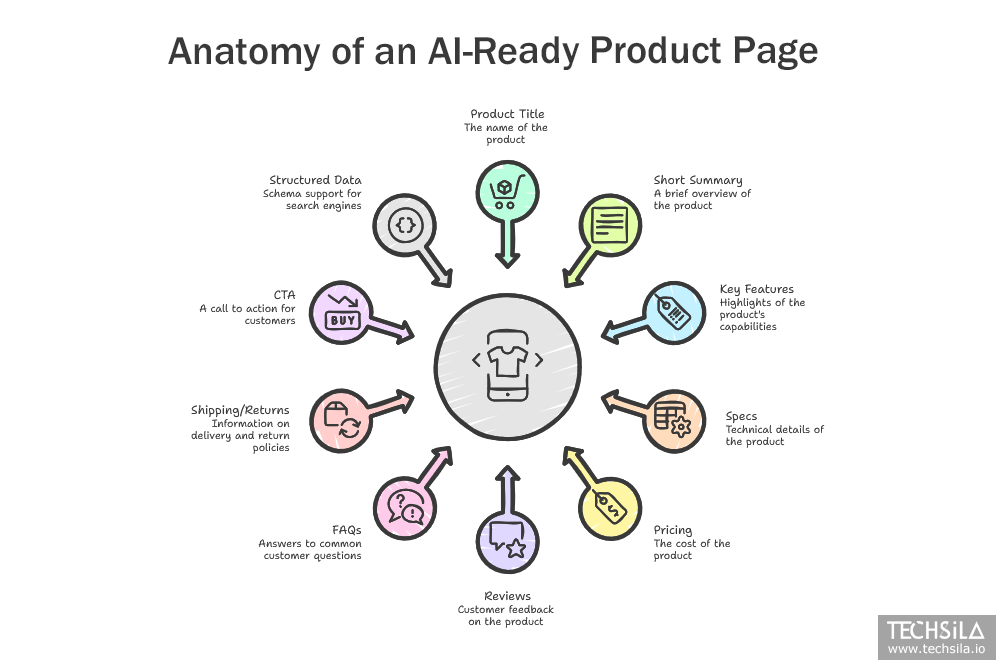
The first step in preparing for Zero-Click AI Shopping is to make every important product page clear, structured, and context-rich. AI systems work best when product information is direct and easy to interpret.
Your product page should answer the most important buying questions immediately:
- What is this product?
- Who is it for?
- What problem does it solve?
- What makes it different?
- What are the key specs?
- What is the delivery and return policy?
- Is it in stock?
- What do buyers say about it?
Do not hide important details in tabs, vague bullet points, or marketing-heavy language. Zero-Click AI Shopping favors clarity over fluff. A shopper asking for an AI tool for “best ergonomic office chair for small apartments” should be able to discover your product because your page clearly describes size, comfort, space-saving design, material, and intended use.
What to improve on every product page
- Clear product title
- Short summary under the title
- Well-written bullet features
- Use-case-based description
- Visible pricing
- Stock status
- Shipping and returns information
- Customer reviews
- FAQ section
2. Use Structured Data to Help AI Understand Your Storefront
One of the strongest supports for Zero-Click AI Shopping is structured data. Schema markup helps search engines and AI systems understand what your page contains. It adds machine-readable context around products, reviews, availability, pricing, FAQs, and business identity.
Think of structured data as translation support for your storefront. Humans can read your content visually. AI systems need cleaner signals. If your product page contains structured product information, AI tools can more confidently interpret and surface your content in answer-driven shopping experiences.
This is especially important for:
- Product pages
- Category pages
- FAQ sections
- Reviews and ratings
- Brand/about pages
- Shipping and return policies
Without structured data, your store may still be readable. But in Zero-Click AI Shopping, readability is not always enough. Clear machine-level signals make your content easier to extract, compare, and present.
3. Write for Pre-Click Decision Making
In Zero-Click AI Shopping, users often decide what they want before they land on your page. That means your content must support pre-click decision making.
Your storefront should not only say what the product is. It should also explain:
- Why someone should choose it
- Who should avoid it
- How it compares to alternatives
- What problem it solves better than others
- What real-life situations it fits
This is where many stores fail. They publish generic descriptions copied from suppliers, then wonder why visibility stays weak. AI-generated shopping experiences reward useful, original context.
Create content that answers real comparison questions:
- Best for beginners
- Best for small spaces
- Best budget option
- Best premium option
- Best for daily use
- Best for sensitive skin
- Best for remote workers
That kind of language helps Zero-Click AI Shopping systems connect your products to real buyer intent.
4. Build Trust Signals Across the Storefront
Trust is not a side element in Zero-Click AI Shopping. It is central.
AI systems are more likely to recommend pages that look credible, complete, and safe for users. Shoppers also need confidence before they click. If your store looks uncertain, outdated, or vague, both people and AI systems may move on.
Important trust signals include:
- Verified reviews
- Clear return and refund policy
- Visible contact details
- Secure checkout indicators
- Brand story or about page
- Real product photos
- Delivery transparency
- Consistent product information
- Social proof and testimonials
In Zero-Click AI Shopping, trust often begins before the visit. That is why your storefront needs a strong digital reputation footprint.
Short Case Study:
A skincare brand improved conversion quality by rewriting product pages around skin type, ingredient clarity, patch-test advice, refund reassurance, and review visibility. AI tools could now surface more useful summaries, while shoppers arriving on-site felt safer and better informed. The brand did not just get more impressions. It earned more confidence.
5. Optimize Images, ALT Text, and Visual Context
Visual content matters in Zero-Click AI Shopping because product discovery is increasingly multimodal. AI systems do not only process text. They also consider images, captions, and visual relevance.
Your product images should do more than look attractive. They should explain the product:
- Front view
- Side view
- Detail shot
- Use in real-life setting
- Scale reference
- Packaging
- Variants
ALT text should also be descriptive, not stuffed or lazy. Instead of writing “product image,” write what the image actually shows in context. Good visual labeling improves accessibility and also strengthens storefront understanding for AI-supported systems
6. Improve Site Speed, Mobile UX, and Storefront Simplicity
Even in Zero-Click AI Shopping, the click still matters when it happens. And when it happens, your site must convert fast with a smooth, conversion-focused storefront experience.
A slow, cluttered, or confusing storefront breaks the momentum built earlier in the AI-driven journey. If the user already received product guidance from an AI assistant, they expect your page to confirm the decision quickly, not create friction.
Your storefront should have:
- Fast loading pages
- Mobile-first layout
- Clean CTA buttons
- Easy variant selection
- Clear checkout path
- Minimal distraction
- Strong readability
- Simple navigation
In Zero-Click AI Shopping, the user may be arriving with high intent. Do not waste that advantage with slow UX.
7. Create Supporting Content Beyond Product Pages
If you want to win at Zero-Click AI Shopping, product pages alone are not enough. Supporting content helps AI systems understand your authority, category knowledge, and buyer usefulness.
Helpful supporting content includes:
- Buying guides
- Comparison posts
- “Best for” articles
- Use-case pages
- Troubleshooting content
- Size guides
- Care instructions
- Industry FAQs
This kind of content expands your presence across informational and commercial-intent searches. It also improves your chances of being cited or summarized in AI-generated answers.
For example, a store selling office furniture should not only have product pages. It should also publish content like:
- Best desks for hybrid work
- How to choose an ergonomic chair
- Small home office setup checklist
- Standing desk vs traditional desk
That wider ecosystem strengthens your position in Zero-Click AI Shopping.
8. Keep Inventory, Pricing, and Policy Information Updated
Outdated information damages both trust and AI visibility. If your storefront shows one price, your feed shows another, and your policy page is unclear, you create friction for both search engines and shoppers.
In Zero-Click AI Shopping, consistency matters. AI systems are more likely to trust and surface content that appears accurate across touchpoints.
Make sure these details stay updated:
- Price
- Availability
- Shipping timelines
- Returns window
- Warranty details
- Promotions
- Product variants
A clean and current storefront improves recommendation readiness.
9. Prepare for Brand Mentions, Not Just Website Visits
One of the smartest ways to think about Zero-Click AI Shopping is this: your goal is not only to get clicks. Your goal is to become mention-worthy.
Can AI tools describe your brand accurately? Can they summarize what makes your store useful? Can they pull consistent signals about your category expertise, quality, shipping, and buyer trust?
That is why brand-level clarity matters. Your homepage, about page, category pages, and blog content should work together to reinforce a simple, strong message about who you help and why your store deserves attention.
Conclusion
Zero-Click AI Shopping is no longer a future concept for e-commerce brands. It is becoming part of how modern customers discover, compare, and choose products in 2026. As AI-powered search, shopping assistants, and answer engines continue to shape buyer behavior, online stores need to do more than just rank. They need to be understood, trusted, and recommended before the click even happens.
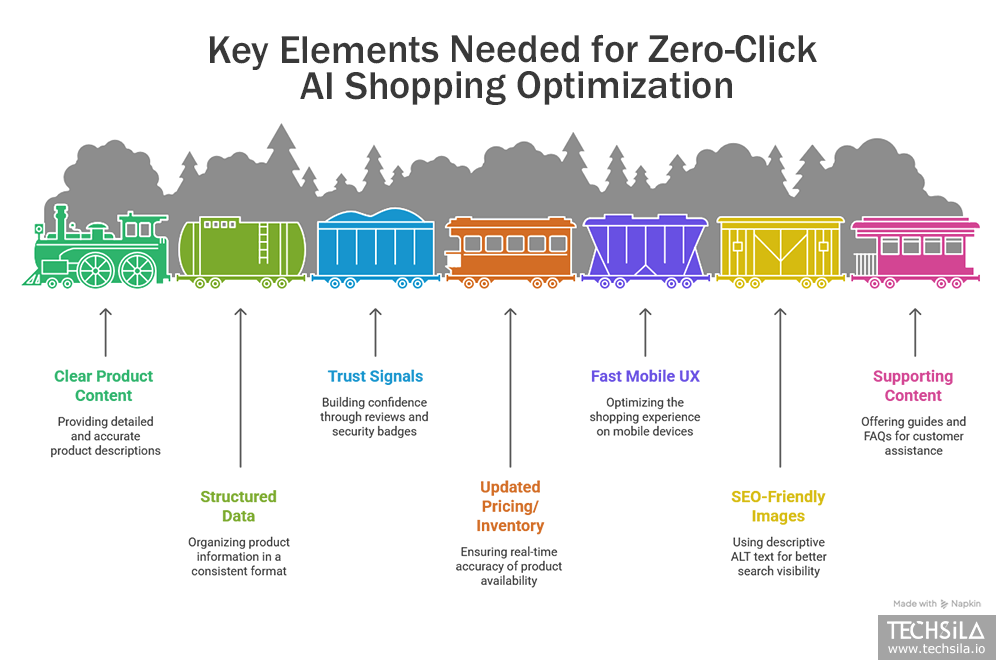
That is why preparing your storefront now matters. Clear product pages, structured data, strong trust signals, useful supporting content, fast user experience, and updated product information all work together to make your brand more visible in Zero-Click AI Shopping. Businesses that treat their storefront as both a conversion tool and an AI-readable source of product intelligence will be in a much stronger position to win.
The brands that succeed in Zero-Click AI Shopping will not be the ones with the loudest marketing alone. They will be the ones with the clearest product communication, the strongest digital trust, and the smartest storefront structure. In 2026, that is what makes an e-commerce store easier to surface, easier to recommend, and easier to buy from.
Ready to Make Your Storefront AI-Ready?
To stay visible in the era of Zero-Click AI Shopping, your e-commerce storefront needs smarter content, stronger SEO, and a conversion-focused user experience. A well-optimized store can compete far more effectively in 2026.
Discover digital solutions at Techsila and move toward a smarter storefront through Request a Quote.
Frequently Asked Questions (FAQs)
1. What is Zero-Click AI Shopping?
Zero-Click AI Shopping is a shopping behavior where users get product recommendations, summaries, and buying guidance directly from AI tools or search interfaces before visiting a website. This means brands must optimize not only for clicks, but also for AI visibility.
2. Why is Zero-Click AI Shopping important for e-commerce in 2026?
In 2026, Zero-Click AI Shopping matters because more customers rely on AI-powered product discovery. If your storefront is not clearly structured and trustworthy, AI systems may not recommend it, even if your products are strong.
3. How can I optimize my store for Zero-Click AI Shopping?
To improve Zero-Click AI Shopping, focus on product page clarity, structured data, reviews, FAQs, fast mobile experience, updated pricing, and useful comparison-based content. These elements help AI systems understand and surface your products.
4. Does Zero-Click AI Shopping reduce website traffic?
It can reduce low-intent clicks, but Zero-Click AI Shopping can also improve traffic quality. The users who do click through are often more informed, more confident, and closer to making a purchase.
5. What type of content supports Zero-Click AI Shopping best?
The most helpful content for Zero-Click AI Shopping includes product pages, buying guides, FAQs, comparison posts, size guides, return information, and review-rich content. AI systems prefer content that answers real buyer questions clearly.
6. Can small e-commerce brands compete in Zero-Click AI Shopping?
Yes, small brands can do very well in Zero-Click AI Shopping if they create clear, trustworthy, and well-structured content. Strong product communication and niche relevance often matter more than brand size alone.
