

Understanding U.S. IT service rates in 2025 is more important than ever. Whether you’re planning to hire a development team, upgrade your cloud infrastructure, or integrate AI into your SaaS platform, the costs can vary dramatically depending on the service type, team expertise, and project complexity. Without a clear understanding of these rates, businesses risk overpaying for IT services or making budget decisions that slow down growth.
So, what actually drives U.S. IT service rates in 2025? Why does one company pay $60 per hour for a software developer while another pays $200 for a similar service? It all comes down to factors such as specialization, geographic location, project scope, and the specific type of IT service.
IT services are no longer just a support function; they’re strategic investments that directly impact how fast your business can scale and innovate. From SaaS development and cloud computing to cybersecurity, AI integration, and backend engineering, every IT investment matters. In 2025, rising demand for specialized skills and stricter compliance requirements are driving prices higher, making it essential to know the real U.S. IT service rates for your projects.
Looking for a trusted partner to help you navigate U.S. IT service rates in 2025? Techsila helps businesses plan smarter, scale faster, and get maximum value from every IT investment.
This guide will cover:
- Key factors influencing U.S. IT service rates in 2025
- Average costs by service type, including software development, SaaS applications, cybersecurity, and managed IT services
- U.S. vs offshore rate comparisons
- Tips to optimize IT spending without sacrificing quality
By the end, you’ll have a complete understanding of IT service costs in the U.S., allowing you to make informed decisions, negotiate effectively, and choose the right IT services for your business.
What Influences U.S. IT Service Rates in 2025
Understanding the factors that drive U.S. IT service rates in 2025 is the first step toward budgeting smartly and avoiding surprises. While it might seem like a simple hourly or project rate, several elements combine to determine what you’ll actually pay. Let’s break them down.
1. Type of IT Service
Not all IT services are created equal. The type of service you need has a huge impact on pricing. For example:
- Software Development & SaaS Applications: Complex projects with multiple integrations or custom features demand highly skilled developers, which increases costs.
- Backend & API Development: Secure, scalable backend systems require advanced expertise, cloud knowledge, and database optimization.
- Cybersecurity Services: Protecting sensitive data or complying with regulations like HIPAA or GDPR can significantly raise rates.
- AI & Machine Learning: Specialized talent for AI and predictive analytics often commands premium pricing due to scarcity and complexity.
Essentially, the more specialized and high-stakes the service, the higher the U.S. IT service rates are expected to be in 2025.
2. Level of Expertise
Experience matters. Junior developers or general IT support may charge lower rates, while senior engineers, architects, or consultants come at a premium. Many businesses are willing to pay higher rates upfront for expert-level work because it reduces errors, improves scalability, and speeds up project delivery.
3. Project Complexity and Scope
The size and complexity of your project also dictate pricing. Small tasks like updating a website or fixing bugs will naturally cost less than developing a SaaS platform from scratch or migrating a legacy system to the cloud. Detailed planning, testing, and ongoing support are also factored into the overall rates.
4. Geographic Location
Even within the U.S., location affects rates. IT services in major tech hubs like San Francisco, New York, or Boston tend to be more expensive than services in smaller cities. This is due to higher local wages, living costs, and talent competition.
5. Engagement Model
Finally, the engagement model plays a big role:
- Hourly Rates: Good for short-term or flexible projects
- Fixed-Price Projects: Preferred for clearly defined scopes
- Dedicated Teams / Retainers: Often used by businesses scaling SaaS platforms or needing long-term support
Choosing the right engagement model can help manage your U.S. IT service rates in 2025 effectively while keeping costs predictable.
Pro Tip: If you’re planning a SaaS platform or complex IT project, leveraging professional SaaS and backend development services ensures your investment in U.S. IT services delivers the best ROI. For instance, Techsila’s SaaS development solutions help businesses navigate rates while maintaining quality and scalability.
Software Development & SaaS Application Rates in the U.S.
When it comes to planning IT budgets, software development and SaaS applications often take up the largest share. But here’s the tricky part: not all software projects are created equal, and understanding U.S. IT service rates in 2025 can feel like decoding a complex puzzle.
For instance, developing a simple web application might cost a fraction of building a fully-featured SaaS platform with multi-tenant architecture, cloud integration, and AI-powered analytics. Similarly, hiring junior developers is more affordable, but if your project demands complex coding, robust security, and scalable architecture, senior developers or specialized teams are essential, and they come at a premium.
The stakes are high. Paying too little for development can lead to technical debt, bugs, and scalability issues, while overspending unnecessarily can strain your budget and slow down growth. That’s why knowing the current U.S. IT service rates in 2025, and what drives them, is critical for any business, whether it’s a startup building its first SaaS product or an enterprise upgrading legacy systems. Understanding U.S. IT service rates in 2025 in this area is crucial for budgeting and planning. Let’s break it down.
Custom Software Development Rates
Custom software development in the U.S. is one of the most significant drivers of IT spending. But the cost isn’t uniform — it depends on project complexity, team expertise, technology stack, and timeline.
Here’s what businesses can expect in U.S. IT service rates in 2025 for custom software projects:
- Junior Developers: $50–$80 per hour
- Mid-Level Developers: $90–$130 per hour
- Senior Developers / Software Architects: $150–$250 per hour
Why such a wide range? It’s all about experience and specialization. A senior developer building a secure, scalable platform with cloud integration and API connections brings far more value than a junior developer handling a simple interface.
Other factors influencing rates include:
-
- Project complexity: Multi-module platforms, integrations with existing systems, or advanced analytics will naturally cost more.
- Technology stack: Mobile apps, hybrid platforms, or AI-enabled solutions require specialized knowledge.
- Timeline pressure: Faster delivery usually increases hourly or project rates.
According to a recent Deloitte study on IT spend trends, U.S. businesses are allocating more of their budget toward custom software and SaaS development, highlighting the growing impact of specialized IT services.
SaaS Application Development
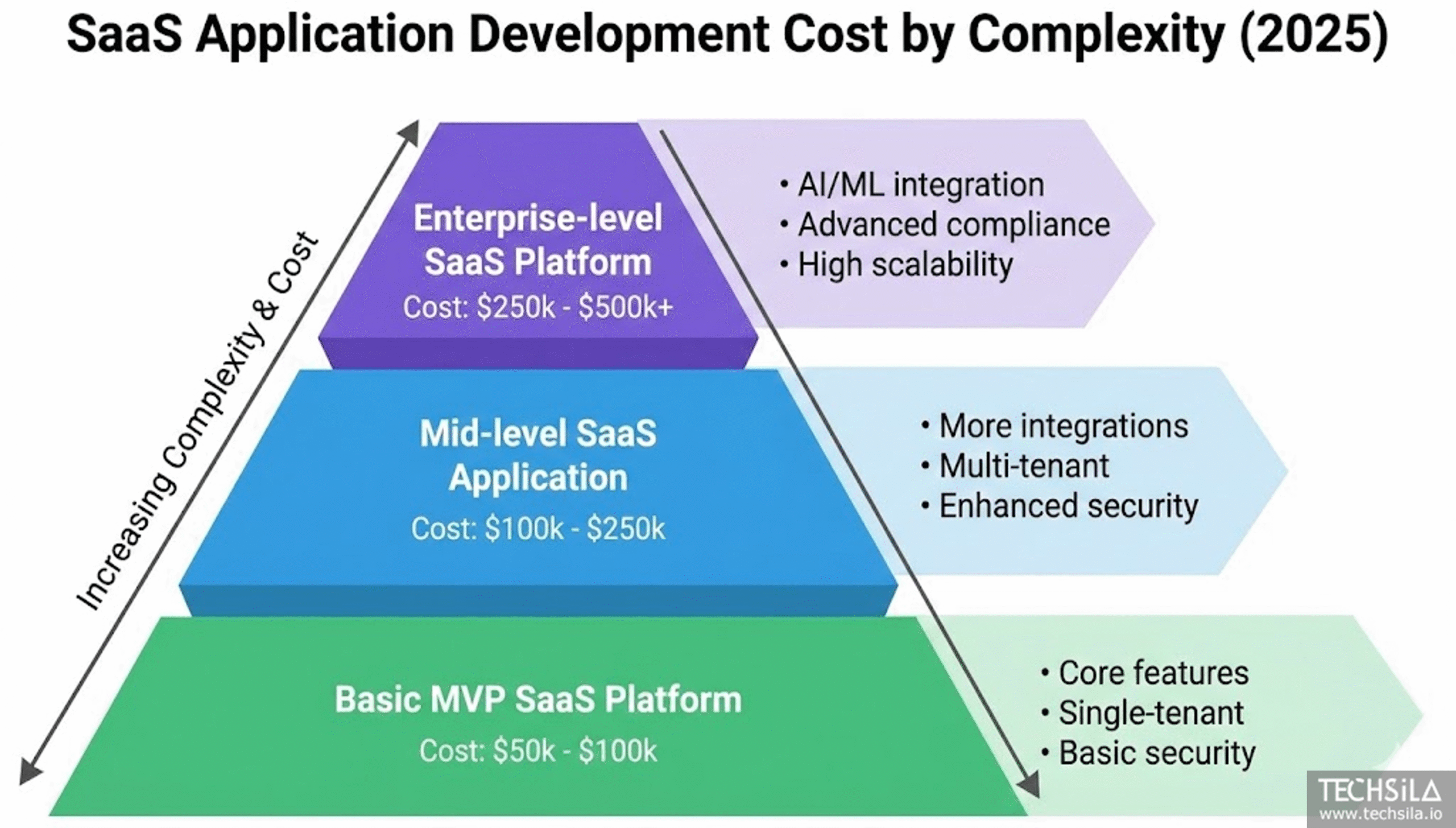
SaaS platforms have unique requirements, which make their development costlier than standard web applications. In the U.S., typical SaaS development rates in 2025 are:
- Basic MVP SaaS platform: $50,000–$100,000 total project cost
- Mid-level SaaS application: $100,000–$250,000
- Enterprise-level SaaS platform: $250,000–$500,000+
Several factors drive these rates:
- Multi-Tenancy Architecture: Supporting multiple customers in a single platform requires complex database and backend designs.
- Security & Compliance: SaaS applications often store sensitive data, meaning developers must implement advanced encryption, access control, and compliance with standards like HIPAA, CCPA, or GDPR.
- Scalability: SaaS platforms must accommodate growth, requiring a strong infrastructure and future-proof architecture.
- AI & Automation: Many modern SaaS applications integrate AI for predictive analytics, personalization, or automation, increasing both complexity and cost.
Businesses looking for expert SaaS development support can rely on Techsila’s AI-powered SaaS application services to design secure, scalable platforms while keeping costs optimized.
Cost Drivers in 2025
Several industry trends are pushing U.S. IT service rates in 2025 higher than in previous years:
- AI and Machine Learning Integration: Platforms leveraging AI require specialized engineers, increasing labor costs.
- Cloud Adoption: AWS, Azure, and Google Cloud expertise is in high demand, adding to rates.
- Talent Shortages: Skilled developers, architects, and AI specialists are scarce, which drives pricing up.
- Regulatory Compliance: SaaS applications handling sensitive data need robust security measures, impacting both hourly and project-based rates.
Cost Optimization Strategies
Even with rising rates, businesses can take steps to maximize ROI on U.S. IT services:
- Start with an MVP: Build only essential features to test the market and reduce upfront costs.
- Use Agile Development: Iterative releases allow flexibility and quicker ROI while reducing wasted development time.
- Leverage Managed Services: Combining development with managed backend or cloud services can save money and reduce maintenance burdens.
- Hire Expert Teams: Partnering with experienced IT providers ensures high-quality delivery, often saving money in the long term by avoiding errors and delays.
Understanding U.S. IT service rates in 2025 for software and SaaS development is crucial for:
- Accurate budgeting
- Selecting the right development team
- Planning realistic timelines
- Avoiding hidden costs
Web Development & CMS Service Pricing in the U.S.
Even in 2025, web development remains a foundational part of IT spending for businesses of all sizes. A well-designed website or content management system (CMS) is more than just a digital presence; it’s a business-critical tool for lead generation, SaaS onboarding, and customer engagement. Understanding U.S. IT service rates in 2025 for web development and CMS services is essential to ensure you get the right quality for your investment.
1. Website Development
The cost of website development depends heavily on the complexity and functionality you need. Here’s a breakdown of typical rates:
- Basic Business Websites: $3,000–$10,000
- Mid-Level Websites (with CMS and custom features): $10,000–$50,000
- Enterprise Websites (complex portals, multi-language support, integrations): $50,000–$150,000+
Factors influencing U.S. IT service rates in 2025 include:
- Design Complexity: Custom designs, interactive elements, or animations require more development hours.
- Functionality: E-commerce platforms, SaaS landing pages, or multi-user portals increase cost.
- CMS Choice: WordPress, Drupal, or headless CMS platforms have different technical requirements and pricing.
- Integrations: CRM, payment gateways, marketing automation, or analytics tools all add complexity and cost.
For businesses looking to optimize web development costs while ensuring professional results, Techsila’s backend development and CMS solutions provide scalable, secure, and fully customized implementations.
2. CMS Integration and Management
Content management systems are crucial for SaaS companies and other businesses that need regular content updates, marketing pages, or product information management. Rates for CMS development and management typically fall into the following ranges:
- CMS Setup and Basic Configuration: $2,000–$5,000
- Custom CMS Development (plugins, templates, dashboards): $5,000–$25,000
- Ongoing CMS Maintenance & Support: $500–$3,000 per month, depending on scope
Choosing the right CMS provider or developer can directly impact your U.S. IT service rates in 2025, as custom development and advanced integrations require experienced professionals.
3. Why Rates Are Higher in 2025
Several trends are influencing U.S. IT service rates in 2025 for web development and CMS services:
- Mobile-First Design: With more users on mobile devices, responsive and adaptive designs are essential.
- Security & Compliance: CMS platforms that handle user data, payment info, or subscriptions must meet high security standards.
- Scalability Requirements: SaaS businesses and large enterprises require systems that can grow without significant redevelopment.
- Integration Complexity: The need to integrate CRM, ERP, or marketing tools adds hours and expertise to projects.
External data also supports this trend. According to Clutch’s 2025 Web Development Report, businesses are increasingly investing in custom web solutions and CMS integrations, which is driving higher U.S. IT service rates.
4. Tips to Optimize Web & CMS Development Costs
Even with rising rates, there are ways to maximize your investment:
- Prioritize Features: Focus on must-have features first, and leave enhancements for later iterations.
- Use Proven CMS Platforms: Leveraging widely-used platforms like WordPress or Drupal can reduce development time and cost.
- Hire Experienced Teams: Experienced developers avoid pitfalls that junior developers might miss, saving time and money.
- Plan for Scalability: Investing slightly more upfront can reduce costly redesigns or migrations later.
Understanding U.S. IT service rates in 2025 for web and CMS development ensures your business can plan budgets realistically, select the right partners, and avoid hidden costs. Cybersecurity & Managed IT Services Rates in the U.S.
In 2025, cybersecurity and managed IT services are no longer optional; they’re essential. With the rise of remote work, cloud adoption, and SaaS platforms handling sensitive data, companies can’t afford weak security or inefficient IT management. Understanding U.S. IT service rates in 2025 for these services helps businesses plan budgets realistically while ensuring they don’t compromise on protection or performance.
1. Cybersecurity Services
Cybersecurity covers a wide range of services, from threat monitoring to compliance management. U.S. rates in 2025 generally fall into these ranges:
- Basic Security Monitoring & Audits: $75–$150 per hour
- Advanced Cybersecurity Services (penetration testing, threat intelligence, compliance management): $150–$300 per hour
- Enterprise Security Solutions (24/7 monitoring, incident response, SOC teams): $300–$500+ per hour
Factors that influence cybersecurity costs include:
- Project Scope: Small businesses may only need vulnerability scanning and firewall setup, whereas enterprise clients require full-scale monitoring and response plans.
- Compliance Requirements: GDPR, CCPA, HIPAA, and PCI DSS compliance can significantly increase costs.
- Technology Complexity: Cloud security, multi-cloud environments, and SaaS integrations require highly skilled professionals.
According to Cybersecurity Ventures, cybercrime damages are expected to reach $10.5 trillion annually by 2025, highlighting why investing in professional cybersecurity services is critical.
2. Managed IT Services
Managed IT services take the burden off your in-house team, providing proactive maintenance, network monitoring, and IT support. Typical rates for U.S. businesses in 2025 are:
- Small Business Packages: $50–$150 per user per month
- Mid-Sized Business Packages: $150–$400 per user per month
- Enterprise Packages: $400–$1000+ per user per month, depending on service complexity
Managed IT services can include:
- Network and server management
- Cloud infrastructure maintenance
- SaaS platform support
- Data backup and disaster recovery
- IT helpdesk and user support
3. Why Rates Are Higher in 2025
Several trends are driving U.S. IT service rates in 2025 higher for cybersecurity and managed services:
- Increased Cyber Threats: Ransomware, phishing, and AI-powered attacks are more sophisticated than ever.
- Remote Work & Cloud Adoption: More endpoints and cloud systems mean larger attack surfaces, requiring advanced monitoring.
- Regulatory Compliance: Data protection laws require companies to invest in high-standard security measures.
- Specialized Talent Shortage: Certified cybersecurity experts and experienced managed IT professionals are in high demand.
4. How to Optimize Costs Without Compromising Security
While rates are high, there are strategies to manage costs:
- Prioritize Critical Assets: Focus security on systems that store sensitive data or manage payments.
- Combine Services: Use bundled managed IT and cybersecurity services for cost efficiency.
- Leverage Automation & AI: Tools like SIEM and AI threat detection reduce the need for constant manual monitoring.
- Hire Experienced Teams: Partnering with expert providers reduces mistakes, downtime, and reactive costs.
Businesses looking for end-to-end IT solutions, including cybersecurity, SaaS platform support, and backend management, can benefit from exploring Techsila’s full range of IT and SaaS solutions. Their team ensures structured, secure, and scalable implementation across all IT services.
Understanding U.S. IT service rates in 2025 for cybersecurity and managed IT services is essential not only for budgeting but also for protecting your business, customers, and reputation. Investing smartly ensures long-term savings, reduced risk, and operational efficiency.
IT Consulting & Emerging Technology Services Rates in the U.S.
IT consulting and emerging technology services are becoming increasingly central to business strategy in 2025. Companies are no longer just looking for developers; they need expert guidance on selecting the right technologies, optimizing infrastructure, and integrating cutting-edge solutions like AI, machine learning, and predictive analytics. Understanding U.S. IT service rates in 2025 for these services is crucial for budgeting and making strategic IT decisions.
1. IT Consulting Services
IT consulting helps businesses plan, implement, and manage technology initiatives efficiently. Rates vary depending on expertise, project scope, and consulting firm reputation:
- Junior IT Consultants: $75–$125 per hour
- Mid-Level IT Consultants: $125–$200 per hour
- Senior IT Consultants / Solution Architects: $200–$400+ per hour
Key factors influencing consulting rates include:
- Business Complexity: Enterprise clients with large infrastructure or multi-region operations require more specialized advice.
- Project Scope: Cloud migration, SaaS integration, or full IT strategy development demands higher expertise.
- Consultant Experience: Certified consultants or industry veterans bring more value but command higher rates.
Hiring experienced IT consultants can save on high costs in the long run. Poor planning or technology mismatches can lead to over-engineered systems, wasted budgets, and project delays.
2. Emerging Technology Services
Emerging technologies like AI, machine learning, predictive analytics, and automation are reshaping how businesses operate. However, these services come with premium rates in 2025:
- AI & Machine Learning Engineers: $150–$350 per hour
- Data Scientists & Predictive Analytics Specialists: $125–$300 per hour
- AI-Powered SaaS Solutions Implementation: $50,000–$250,000+, depending on complexity
Factors that drive these rates:
- Talent Scarcity: AI and data experts are in high demand, which pushes pricing upward.
- Integration Complexity: Connecting AI solutions with existing systems or SaaS platforms requires specialized skills.
- Compliance & Security: AI solutions handling sensitive data need secure, compliant architectures.
- Scalability: Enterprises demand AI systems that can scale seamlessly, adding to development costs.
Emerging technologies are a high-value investment, but they require careful planning. Poorly implemented AI or automation can be costly and ineffective.
3. Why Rates Are Higher in 2025
Several trends have driven U.S. IT service rates in 2025 upward for consulting and emerging tech:
- Rapid adoption of AI, cloud, and predictive analytics across industries
- Increasing demand for strategic IT guidance to ensure ROI
- Talent shortage in specialized fields like machine learning, cybersecurity, and cloud architecture
- Rising regulatory requirements, especially for data-intensive solutions
4. Optimizing Costs Without Sacrificing Quality
Businesses can manage costs while leveraging high-value IT consulting and emerging tech services:
- Focus on Priority Initiatives: Start with projects that directly impact growth or efficiency.
- Leverage Expert Teams: Partnering with experienced providers reduces risk and accelerates delivery.
- Use Phased Implementation: Break large projects into manageable phases to control costs.
- Combine Services: Some providers offer bundled consulting, development, and managed services for cost efficiency.
For businesses looking for a comprehensive, end-to-end approach, Techsila’s full range of IT and SaaS solutions ensures expert IT consulting, AI integration, and SaaS development under one roof, helping you optimize costs while achieving maximum business impact.
U.S. vs Offshore IT Service Cost Comparison
When planning IT budgets, many businesses weigh the option of hiring U.S.-based IT teams versus offshore development centers. Understanding U.S. IT service rates in 2025 alongside offshore alternatives can help companies make smarter financial and strategic decisions.
1. Cost Differences
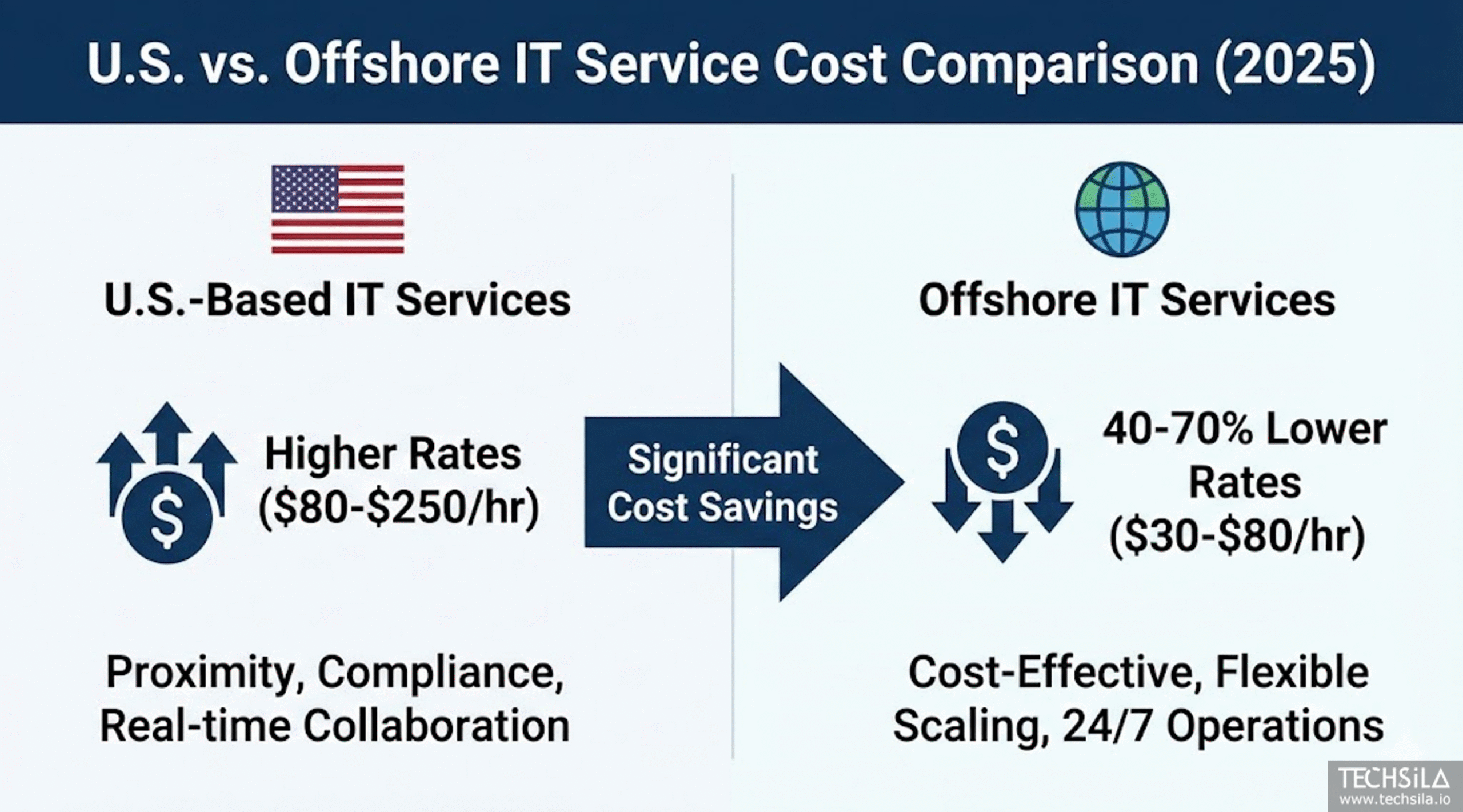
U.S. IT service rates in 2025 are generally higher than offshore rates due to higher labor costs, strict regulations, and the demand for specialized talent. Here’s a rough comparison:
| Service Type | U.S. Rates (per hour) | Offshore Rates (per hour) |
| Software Development | $80–$250 | $30–$80 |
| Web & CMS Development | $50–$150 | $20–$60 |
| Cybersecurity Services | $75–$500 | $40–$120 |
| AI / Data Engineering | $150–$350 | $50–$150 |
| IT Consulting | $75–$400 | $40–$120 |
The savings of offshore IT services can range from 40% to 70% depending on service type and location. However, cost is not the only factor to consider.
The savings of offshore IT services can range from 40% to 70% depending on service type and location. However, cost is not the only factor to consider.
2. Quality and Expertise
While offshore teams are more cost-effective, U.S.-based IT teams often offer:
- Proximity to U.S. business operations
- Better alignment with local compliance and regulatory requirements
- Real-time collaboration across similar time zones
- Established industry experience and certifications
The challenge is to balance cost savings with quality and project management efficiency.
3. Engagement Models
Offshore development centers (ODCs) offer flexible engagement models that combine the benefits of both worlds:
- Dedicated Teams: Offshore developers work exclusively for your project, ensuring consistency.
- Hybrid Models: Core team in the U.S. coordinates with offshore developers for cost optimization.
- Managed ODCs: The provider manages the team, processes, and infrastructure, delivering end-to-end IT solutions.
By leveraging an offshore development model, businesses can significantly reduce costs while maintaining high-quality output.
4. Optimizing U.S. IT Service Investments
Many companies adopt a hybrid approach:
- Use U.S.-based teams for strategy, architecture, cybersecurity, and compliance-critical functions.
- Use offshore teams for development, testing, and ongoing maintenance.
- Ensure seamless communication and project management with experienced offshore partners.
Businesses looking for reliable offshore development options can explore Techsila’s Offshore Development Center (ODC) services. Techsila helps companies set up dedicated offshore teams with full management, ensuring cost efficiency, high quality, and alignment with U.S. standards.
How to Choose the Right IT Service Model
Choosing the right IT service model is one of the most important decisions a business can make in 2025. With U.S. IT service rates in 2025 rising and offshore alternatives available, selecting the optimal approach can save money, improve efficiency, and reduce project risk.
1. Understand Your Business Needs
The first step is to clearly define your objectives:
- Are you building a SaaS platform from scratch?
- Do you need ongoing IT support or managed services?
- Is cybersecurity and compliance your top priority?
- Are you integrating AI, machine learning, or predictive analytics?
Answering these questions helps determine whether you need full-time in-house teams, U.S.-based vendors, offshore developers, or a hybrid approach.
2. Compare U.S. vs Offshore Models
Here’s a practical way to evaluate each option:
U.S.-Based IT Services:
- Higher rates, especially for specialized skills
- Closer alignment with business operations and time zones
- Strong expertise in regulatory compliance and enterprise solutions
Offshore Development Centers (ODC):
- Lower labor costs, often 40–70% cheaper than U.S. rates
- Flexible scaling for development and support teams
- Can be combined with U.S.-based strategic oversight for hybrid efficiency
Many businesses use a hybrid model: core strategic functions like architecture, security, and compliance are handled in the U.S., while offshore teams manage development, testing, and support. This approach balances cost, quality, and control.
3. Consider Engagement Models
Beyond location, the engagement model also affects U.S. IT service rates in 2025:
- Hourly/Time & Material: Flexible, ideal for projects with evolving requirements
- Fixed-Price Projects: Best for well-defined scopes, minimizing surprises
- Dedicated Teams / Retainer: Suited for long-term projects or SaaS platform scaling
Choosing the right model ensures predictable budgeting while aligning team incentives with business goals.
4. Evaluate Vendor Expertise
Regardless of location, always assess vendor capabilities:
- Industry experience and relevant technology expertise
- Portfolio and case studies, including SaaS, AI, cloud, or cybersecurity projects
- Quality assurance processes and delivery track record
- Communication, project management, and collaboration tools
Techsila, for instance, offers end-to-end IT and SaaS solutions with dedicated offshore teams, U.S.-based project oversight, and specialized expertise in software development, AI integration, and cybersecurity.
5. Factor in Long-Term ROI
It’s tempting to choose the lowest hourly rate, but true ROI comes from:
- High-quality development that reduces maintenance costs
- Secure, scalable platforms that avoid future redesigns
- Expertise that speeds up time-to-market and reduces errors
By evaluating U.S. IT service rates in 2025 alongside these long-term benefits, businesses can make smarter, more sustainable investments.
Conclusion: Mastering U.S. IT Service Rates in 2025 for Maximum Impact
Picture this: your business is ready to launch a new SaaS product, secure critical data, or scale your cloud infrastructure, but without a clear understanding of U.S. IT service rates in 2025, every decision feels like a gamble. Pay too little, and you risk technical debt, delays, or security gaps. Pay too much, and your budget suffers unnecessarily.
The truth is, IT services aren’t just costs, they’re strategic investments. From software development and SaaS applications to cybersecurity and managed IT, each dollar you spend shapes your company’s growth, agility, and competitive edge. Rates vary depending on service type, expertise, project complexity, and engagement model but armed with the right insights, you can turn costs into opportunities.
Here’s the takeaway: businesses that understand the real numbers, choose the right service model, and leverage experienced partners are the ones that thrive in 2025. You don’t have to navigate this complexity alone. Whether it’s building a cutting-edge SaaS platform, securing your operations, or scaling IT capabilities efficiently, having the right team makes all the difference.
Ready to stop guessing and start investing wisely? Request a quote from Techsila today. Their expert team can help you navigate U.S. IT service rates, set up dedicated offshore teams, and deliver high-quality, scalable, and secure IT solutions that maximize ROI.
Don’t let rising IT costs hold your business back. Make informed decisions, optimize your spend, and power growth with confidence in 2025.
FAQs
- What are the average U.S. IT service rates in 2025?
Rates vary by service type and expertise. Junior developers may charge $50–$80/hour, senior software architects $150–$250/hour, and cybersecurity experts $75–$500/hour, depending on scope. - Why do U.S. IT service rates in 2025 vary so much?
Costs depend on project complexity, skill level, technology stack, geographic location, and engagement model (hourly, fixed-price, or dedicated team). - How can businesses optimize IT service costs?
Use MVP approaches, agile development, hybrid U.S./offshore teams, and partner with experienced IT providers like Techsila to balance quality and cost. - Are offshore teams a good alternative to U.S.-based IT services?
Yes. Offshore teams can reduce costs by 40–70% while maintaining quality, especially when combined with U.S.-based oversight for strategic and compliance-critical tasks.
