

In 2025, Mobile App Development Cost in the U.S. has become one of the most critical factors shaping a company’s digital success or failure. With iOS and Android leading the market, selecting the right platform is no longer just a technical choice; it’s a financial decision that directly impacts ROI, scalability, and long-term growth.
The challenge? Rising demand for AI-powered features, stricter data protection laws, and ever-evolving design standards are driving Mobile App Development Costs higher than ever before. This complexity makes accurate budgeting essential for businesses planning their digital transformation. Without a well-defined strategy, companies risk overspending by 20–30%, turning what should be a growth investment into an expensive setback. That’s why understanding platform choice and precise Mobile App Development Cost forecasting has become the foundation of every successful digital strategy in 2025.
With expert App Development Services at Techsila, your businesses can estimate budgets more accurately, optimize costs, and achieve scalability. However, to make a smart investment, you need to understand what “mobile app development cost” actually means in today’s U.S. market.
What Is the Mobile App Development Cost?
In simple terms, it refers to the total investment required to design, build, test, and launch a mobile application.
This includes:
-
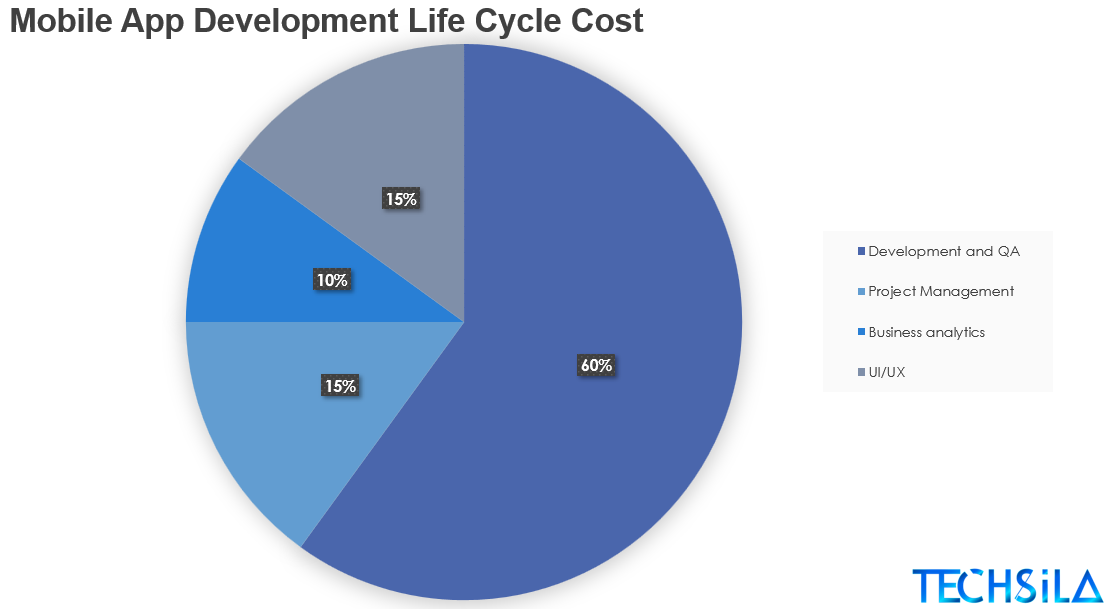
UI/UX design
-
Coding (frontend + backend)
-
Platform choice (iOS vs. Android)
-
Third-party integrations (APIs, payment gateways)
-
Security & compliance (HIPAA, GDPR, PCI-DSS)
-
App store submission & optimization
-
Ongoing maintenance and updates
Think of it as the complete financial picture of turning your app idea into a market-ready product.
Why Mobile App Development Costs Matter in 2025
The U.S. app industry is booming, and so are the expenses tied to it. According to Allied Market Research, global mobile app revenue is projected to skyrocket to $613 billion by 2025. With such massive growth on the horizon, Mobile App Development Cost has become a critical factor that businesses cannot afford to overlook.
In today’s competitive landscape, building an app goes far beyond simple coding. It’s about creating a complete digital product—one that demands design excellence, seamless user experience, ongoing updates, effective user acquisition strategies, and constant performance optimization. Each of these elements adds to the overall Mobile App Development Cost, making accurate forecasting essential. Companies that underestimate these costs risk underfunding their projects, losing market share, and ultimately falling behind competitors who plan strategically.
Average Mobile App Development Costs in the U.S. (2025)
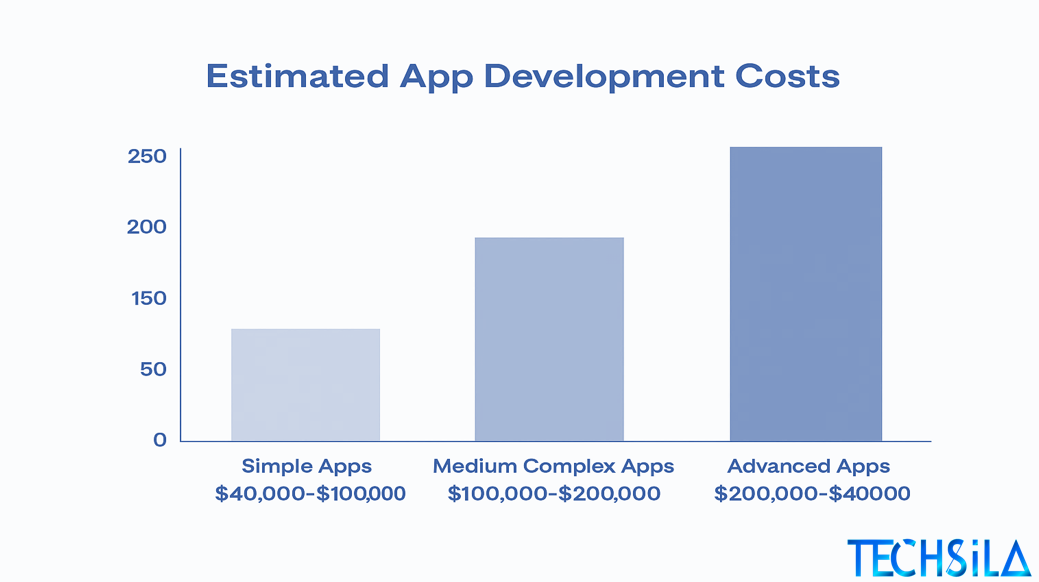
| App Complexity | iOS Development Cost (U.S.) | Android Development Cost (U.S.) | Timeline |
|---|---|---|---|
| Simple App (basic features) | $40,000 – $60,000 | $35,000 – $55,000 | 3–4 months |
| Medium App (API integration, databases) | $60,000 – $120,000 | $55,000 – $110,000 | 4–8 months |
| Complex App (AI, AR/VR, fintech, SaaS) | $120,000 – $250,000+ | $110,000 – $230,000+ | 8–15 months |
Tip: Costs vary based on location, expertise, and whether you hire freelancers, in-house teams, or agencies like Techsila.
iOS Development Costs in the U.S
Advantages of iOS Development
-
-
Strong U.S. market share: iOS dominates the U.S. market with a 57% share of mobile OS in 2025 (StatCounter).
-
-
Faster development cycles due to fewer device variations.
-
Higher revenue potential from in-app purchases and subscriptions.
Cost Drivers for iOS
-
Programming Language: Swift requires highly skilled developers ($120–$150/hr in the U.S.).
-
Design Standards: Apple’s HIG demands polished UI/UX.
-
App Store Compliance: A strict review process results in more revisions and resubmission costs.
Example: A fintech startup building a secure iOS wallet may spend $180,000–$220,000 due to compliance, encryption, and Apple’s strict review.
Need a hybrid or native solution? Explore our Backend Development Services.
Android Development Costs in the U.S.
Advantages of Android Development
-
Larger global market share: Android holds ~70% worldwide (IDC).
-
Better reach in developing countries.
-
More customization options thanks to open-source flexibility.
Cost Drivers for Android
-
Programming Language: Kotlin/Java often requires longer testing cycles.
-
Device Fragmentation: Thousands of devices = more QA and bug fixing.
-
Play Store Policies: Easier approvals but frequent security patches raise long-term costs.
Example: An eCommerce business targeting global users may spend $150,000–$200,000 on Android to optimize across devices.
iOS vs. Android Development Costs: Direct Comparison
| Factor | iOS | Android |
|---|---|---|
| Average Hourly Rate (U.S.) | $120–$150/hr | $100–$140/hr |
| Development Speed | Faster | Slower (device testing) |
| Revenue Potential | Higher (premium users) | Broader (ad-driven apps) |
| Maintenance Cost | Medium | High (fragmentation updates) |
According to Business of Apps, U.S. companies spend 20% more on Android maintenance compared to iOS.
Hidden Factors That Increase Mobile App Development Costs
-
Third-Party Integrations (CRM, payments, cloud storage).
-
AI-powered features like chatbots & predictive analytics (Generative AI Development).
-
AR/VR components.
-
Security & compliance (HIPAA, PCI-DSS).
-
Cloud hosting (AWS, GCP, Azure).
-
ASO & marketing.
-
Post-launch maintenance.
Pro Tip: Investing in UI/UX & performance optimization increases upfront cost but boosts ROI long-term.
iOS vs. Android in 2025: Which Should Businesses Choose?
-
Startups: iOS first (U.S. premium customers).
-
Enterprises: Android (scalability + global reach).
-
SaaS & FinTech Apps: iOS first (security + subscriptions).
-
eCommerce & Ad-Supported Apps: Android first (bigger user base).
-
Healthcare/Education Apps: Launch on both for broad demographics.
Case Example: A healthcare startup in New York may start with iOS due to HIPAA compliance, but expand to Android within 18 months.
Conclusion
Mobile App Development Costs in the U.S.: iOS vs. Android in 2025 largely depend on complexity, feature requirements, and long-term growth strategy. While iOS often requires a higher upfront investment, it typically delivers faster ROI due to its premium user base and higher spending. On the other hand, Android development may involve more extensive testing and ongoing maintenance, but it offers access to a broader global audience.
If you’re planning to build a mobile app in 2025, understanding the Cost of Mobile App Development is the first step toward success. At Techsila, we help businesses reduce development expenses by up to 30% through a smart blend of U.S.-based expertise and offshore efficiency. Request your free quote today and start building an app that balances cost, quality, and scalability.
FAQs
1. How much does it cost to develop an app in iOS 2025?
The average iOS Mobile App Development Costs in 2025 range from $40,000 to $220,000, depending on features, compliance, and design complexity.
2. How much does it cost to develop an app for Android vs iOS?
On average, iOS apps cost slightly more upfront ($60,000–$220,000) due to Apple’s strict design and compliance rules, while Android apps range from $55,000–$200,000 but have higher long-term maintenance costs.
3. Is app development worth it in 2025?
Yes. With global app revenues projected to surpass $600 billion in 2025, investing in app development offers high ROI if costs are managed strategically.
3. Which platform gives better ROI: iOS or Android?
-
iOS → better ROI in the U.S. (subscriptions, premium users).
-
Android → better ROI globally (ads, larger volume).
4. What hidden costs should I budget for?
Cloud hosting, APIs, compliance, app store optimization, marketing.
5. Should startups build for iOS or Android first in 2025?
-
U.S./premium audience: iOS first.
-
Global/ad-driven apps: Android first.
