


Imagine this: you find a talented SaaS development team overseas, negotiate a project at what seems like an unbeatable rate, and feel confident that your new platform will be delivered on time and within budget. Fast forward a few months, and you’re facing delays, unexpected revisions, misaligned features, and escalating costs that weren’t in the original quote. Sound familiar? You’re not alone.
While outsourcing SaaS development can save money and speed up delivery, there’s a flip side: the hidden costs of outsourcing SaaS development. These are the expenses and challenges that aren’t visible in the contract or hourly rates, but they can quietly inflate your project’s budget, extend timelines, and even affect product quality.
From communication challenges across time zones to compliance headaches, mismanaged expectations, and technical debt, these hidden costs often catch businesses off guard. In 2025, when SaaS competition is fiercer than ever, and user expectations are sky-high, overlooking them can turn a seemingly cost-effective outsourcing strategy into a major financial risk.
The key question is: how can you enjoy the benefits of outsourced SaaS development without falling into these hidden cost traps?
This guide dives deep into:
-
The most common hidden costs of outsourcing SaaS development
-
How these costs sneak into your projects and why they happen
-
Practical strategies to avoid them entirely
-
How to select outsourcing partners who deliver quality, transparency, and predictable ROI
By understanding these hidden costs before you start, you’ll be able to make smarter decisions, plan realistic budgets, and build SaaS platforms that scale efficiently without surprise expenses derailing your project.
Pro Tip: Avoid hidden pitfalls by partnering with a trusted SaaS development provider. Techsila’s outsourced teams help businesses manage costs, deliver on time, and build high-quality platforms without surprises.
Common Hidden Costs of Outsourcing SaaS Development
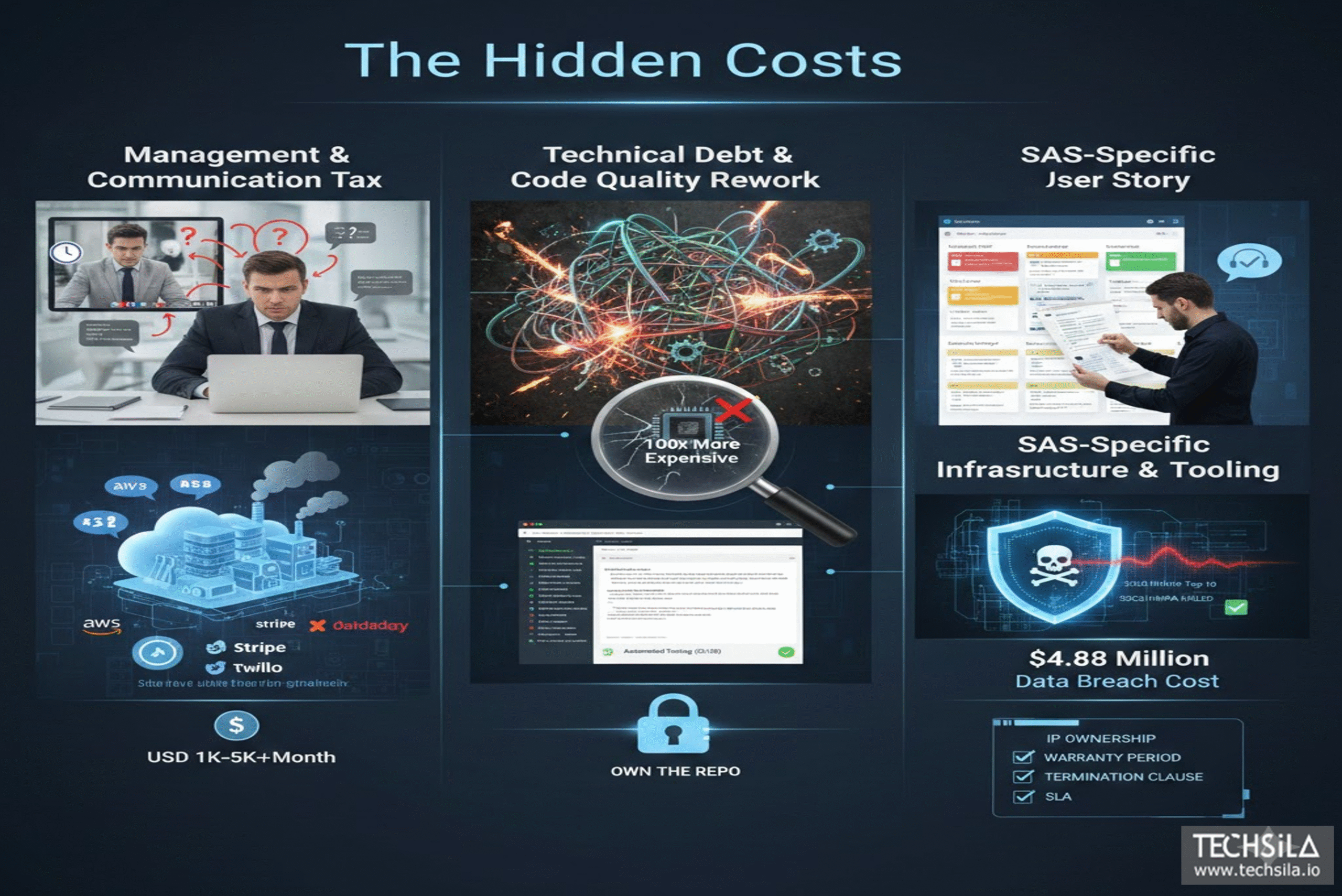
Outsourcing SaaS development can seem straightforward at first: you pick a vendor, agree on a rate, and expect smooth delivery. But many businesses quickly discover there are hidden costs of outsourcing SaaS development that don’t appear in contracts or initial quotes. Understanding these costs upfront is key to avoiding surprises.
Let’s break down the most common ones:
1. Communication and Time Zone Challenges
One of the most underestimated hidden costs is poor communication. When your development team is in a different country or time zone:
-
Misunderstandings about feature requirements can lead to rework, which increases both time and cost.
-
Delays in responses slow project progress, especially during critical milestones.
-
Lack of synchronous meetings can make it harder to track progress or catch issues early.
Example: A U.S. SaaS company outsourcing backend development to an overseas team may experience a 24–48-hour delay for every clarification request, stretching timelines and inflating costs.
Tip: Schedule overlapping hours and invest in project management tools to reduce communication gaps.
2. Quality and Technical Debt
Another hidden cost is compromised code quality. Sometimes, outsourcing teams focus on delivering quick solutions to meet deadlines rather than building maintainable, scalable code. This can result in:
-
Technical debt that needs to be addressed later
-
Higher maintenance costs
-
Slower feature releases as the platform grows
According to a report by Forrester on software quality in outsourced projects
Businesses often spend 20–30% more on post-launch bug fixes than anticipated due to initial shortcuts.
Tip: Include code quality standards, automated testing, and peer reviews in the contract.
3. Misaligned Expectations and Scope Creep
Many projects start with vague requirements, leading to scope creep features being added midway without proper planning. This is one of the top hidden costs of outsourcing SaaS development. Scope creep can:
-
Increase project timelines
-
Push costs beyond the original budget
-
Create tension between your in-house and outsourced teams
Tip: Use a detailed requirements document, agile sprints, and regular progress reviews to manage scope.
4. Compliance and Security Risks
SaaS platforms often handle sensitive data like customer information, payment details, or business analytics. If your outsourcing partner doesn’t follow proper security protocols:
-
You may incur penalties for non-compliance with GDPR, CCPA, or HIPAA
-
Fixing security breaches is often far more expensive than proactive compliance
-
Reputational damage can result in lost customers
Tip: Verify the team’s experience in secure SaaS development, require audits, and include compliance checkpoints.
5. Hidden Costs of Maintenance and Support
Outsourced SaaS projects don’t end at launch. Hidden costs include:
-
Ongoing support for bug fixes or feature updates
-
Unexpected server or cloud infrastructure costs
-
Vendor management overhead
These can cumulatively add 20–40% of your initial project cost if not planned properly.
Tip: Negotiate post-launch support agreements and consider dedicated offshore teams to reduce long-term expenses.
For businesses looking to minimize these hidden costs, Techsila’s Offshore Development Center (ODC) provides structured, scalable SaaS development with transparent pricing and expert management.
How Hidden Costs Affect Your Budget and ROI

Outsourcing SaaS development can save money upfront, but if you don’t account for the hidden costs of outsourcing SaaS development, your budget and ROI can take a serious hit. Understanding the financial impact of these hidden costs is critical for any business planning to build a scalable SaaS platform.
1. Unexpected Budget Overruns
Even when hourly rates or fixed project costs seem affordable, hidden costs quickly accumulate:
-
Rework due to miscommunication or unclear requirements
-
Additional QA cycles for subpar code
-
Extra sprints for feature revisions or scope creep
These factors can inflate your SaaS development budget by 20–40%. Businesses that ignore these hidden costs often face cash flow challenges or have to compromise on features, delaying product launches.
Example: A SaaS startup outsourced its MVP development at $40,000. Due to unclear requirements and misaligned expectations, rework and additional features pushed the total cost to $65,000—over 60% above the original budget.
Tip: Factor in a 10–20% contingency for potential hidden costs when planning your SaaS development budget.
2. Delayed Time-to-Market
Hidden costs aren’t just financial; they also affect time-to-market. Delays caused by:
-
Communication gaps across time zones
-
Misunderstood requirements
-
Rework due to poor code quality
…can extend your project timeline by weeks or months. This delay means lost opportunities, slower user adoption, and, in competitive SaaS markets, potentially lost revenue.
Tip: Use clear project milestones, daily stand-ups, and collaborative tools like Jira or Trello to keep the team aligned and reduce delays.
3. Impact on ROI
ROI from outsourcing SaaS development isn’t just about initial costs it’s about the long-term value of your platform. Hidden costs can reduce ROI by:
-
Increasing maintenance expenses
-
Forcing compromises on critical features
-
Creating scalability issues that require expensive redesigns later
For instance, choosing a low-cost vendor may save $20,000 upfront, but if their work introduces technical debt that costs $50,000 to fix later, your ROI turns negative.
Tip: Focus on value, not just upfront cost. A slightly higher investment in experienced developers can save 3–5x in maintenance and rework costs over the platform’s lifecycle.
4. Reputation and Customer Trust Risks
While harder to quantify, hidden costs can also impact your brand. Bugs, delays, or security issues in outsourced SaaS development can:
-
Damage customer trust
-
Lead to churn
-
Result in negative reviews
Protecting your reputation requires investing in quality development and thorough testing—both of which may not be included in low initial quotes.
Strategies to Avoid Hidden Costs in Outsourced SaaS Development
Outsourcing SaaS development doesn’t have to be a gamble. By proactively planning and implementing the right strategies, you can minimize or even eliminate the hidden costs of outsourcing SaaS development. Here’s how to do it effectively.
1. Clearly Define Project Scope and Requirements
One of the biggest contributors to hidden costs is scope creep, when the project expands beyond the original plan without adjusting the budget or timelines.
Best Practices:
-
Document requirements in detail before starting. Include features, integrations, and performance expectations.
-
Use tools like Jira, Asana, or Trello to track requirements and tasks.
-
Set clear acceptance criteria for each deliverable to reduce rework.
Example: Startups that document every user flow, integration point, and compliance requirement upfront often avoid 30–50% of potential rework costs.
2. Choose the Right Outsourcing Model
Different outsourcing models have different cost implications. Choosing the wrong one can lead to unexpected expenses:
-
Hourly Rate / Time & Material: Flexible, but can spike if the project takes longer than expected.
-
Fixed Price: Predictable budget, but changes require formal change requests.
-
Dedicated Team / Offshore Development Center (ODC): Provides long-term consistency, reduces ramp-up time, and mitigates hidden costs.
Businesses can reduce risk by partnering with Techsila’s Offshore Development Center (ODC), ensuring structured teams, clear reporting, and controlled budgets.
3. Prioritize Communication and Collaboration
Communication gaps are a hidden cost killer, especially when working with offshore teams. Misunderstandings can lead to rework, delays, and increased expense.
Tips for effective communication:
-
Schedule regular video calls and daily stand-ups.
-
Maintain a shared project repository for documentation, design files, and code.
-
Assign a project manager or liaison to coordinate between your in-house team and the outsourced team.
External Reference: According to PMI’s 2023 Pulse of the Profession, poor communication is one of the top reasons IT projects exceed budget and timeline.
4. Invest in Quality Assurance (QA) Early
Skipping QA or deferring testing until the end can be a huge hidden cost. Bugs and issues discovered late are far more expensive to fix.
Strategies:
-
Integrate automated and manual testing throughout development.
-
Perform continuous code reviews.
-
Include QA milestones in contracts and project timelines.
Example: Continuous testing and early QA can reduce rework costs by up to 40% compared to a “test at the end” approach.
5. Negotiate Clear Contracts with Transparent Pricing
Contracts that lack transparency are a common source of hidden costs. Make sure your outsourcing agreement clearly outlines:
-
Scope of work
-
Hourly or fixed rates
-
Payment milestones
-
Change request procedures
-
Support and maintenance obligations
6. Leverage Technology to Reduce Hidden Costs
Modern project management and collaboration tools can prevent unnecessary delays, miscommunication, and duplicated effort:
-
Version control & code repositories: GitHub, GitLab
-
Task tracking: Jira, ClickUp
-
Real-time collaboration: Slack, Microsoft Teams
By using these tools effectively, you minimize the hidden costs of outsourcing SaaS development while increasing productivity.
Real-World Case Studies of Hidden Costs in Outsourced SaaS Projects
Understanding theory is one thing, but seeing real-world examples of hidden costs in outsourced SaaS development helps businesses recognize potential pitfalls before they occur. Let’s walk through a few scenarios where companies faced unexpected expenses and what they could have done differently.
Case Study 1: Scope Creep in a Startup SaaS Platform
Scenario:
A U.S.-based SaaS startup hired an offshore team to build its MVP. The project started with a simple feature set, but during development, the founder requested additional features like analytics dashboards, payment gateway integrations, and multi-language support.
Hidden Costs Encountered:
-
Additional development hours beyond the original contract
-
Delayed delivery, causing lost potential revenue
-
Extra QA and testing cycles
Case Study 2: Miscommunication and Rework
Scenario:
An enterprise client outsourced the development of a SaaS module to a vendor in a different time zone. The vendor misunderstood a critical API integration requirement, leading to the module being built incorrectly.
Hidden Costs Encountered:
-
Rework for developers to fix the integration
-
Extended project timeline
-
Increased QA costs
Lesson Learned:
Regular communication, daily stand-ups, and using shared project documentation tools are crucial. External data from PMI’s 2023 Pulse of the Profession shows that poor communication is one of the top reasons IT projects exceed budgets.
Case Study 3: Inadequate QA and Late Bug Discovery
Scenario:
A SaaS platform was outsourced to a small development firm without an integrated QA process. The application was delivered on time; however, multiple critical bugs emerged post-launch, negatively impacting users.
Hidden Costs Encountered:
-
Emergency bug fixes and overtime development
-
Negative customer feedback and churn
-
Additional QA cycles for regression testing
Lesson Learned:
Integrating QA from the start, with automated and manual testing throughout development, can prevent these costs. Early investment in QA reduces long-term expenses and ensures a high-quality product.
Case Study 4: Unclear Contracts and Pricing
Scenario:
A mid-sized company outsourced SaaS maintenance and enhancements without a detailed contract. The vendor billed hourly for minor tweaks and small changes, which weren’t clearly defined in the agreement.
Hidden Costs Encountered:
-
Unexpected high monthly invoices
-
Disputes over billing rates
-
Project delays due to unclear responsibilities
Lesson Learned:
Transparent contracts with clear pricing, defined deliverables, and change management procedures can prevent these issues. Always specify hourly rates, fixed-price components, and support scope.
Key Takeaways from Case Studies
-
Scope Management Matters: Clear documentation and formal change requests reduce hidden costs.
-
Communication is Crucial: Daily updates, shared repositories, and project managers prevent misalignment.
-
QA Early and Often: Integrating testing during development avoids expensive fixes post-launch.
-
Transparent Contracts: Clearly defined terms, rates, and deliverables prevent billing surprises.
-
Structured Offshore Partnerships: Partnering with experienced providers like Techsila ensures teams are well-managed, costs are controlled, and projects stay on track.
By learning from these real-world examples, businesses can better anticipate potential pitfalls, reduce unnecessary expenditures, and make informed decisions when outsourcing SaaS development.
Conclusion:
Outsourcing SaaS development can offer tremendous advantages faster product launches, access to specialized talent, and reduced operational overhead. But without proper planning, the hidden costs of outsourcing SaaS development can quietly inflate budgets, delay timelines, and even compromise product quality.
Many businesses underestimate these hidden costs. From scope creep and miscommunication to inadequate QA, unclear contracts, and unforeseen maintenance needs, the hidden costs of outsourcing SaaS development can add up faster than expected. Ignoring them can turn a cost-saving strategy into a costly mistake.
The key to avoiding these pitfalls is awareness and strategy. By clearly defining project scopes, integrating QA from the start, maintaining strong communication, and partnering with experienced offshore teams, businesses can minimize the hidden costs of outsourcing SaaS development while maximizing ROI.
Techsila specializes in helping businesses navigate these challenges. With structured offshore SaaS development services, expert project management, and scalable solutions, Techsila ensures you avoid the hidden costs of outsourcing SaaS development, delivering high-quality platforms on time and within budget.
Don’t let unexpected expenses slow your growth. Request a quote from Techsila today to see how our SaaS development solutions can help your business scale efficiently while avoiding the hidden costs of outsourcing SaaS development.
