

Have you ever noticed how machines are starting to “see” the world around us? That’s the magic of computer vision applications. Once considered the playground of tech giants, this technology is now stepping into industries far beyond traditional tech. From spotting defects on factory floors to helping doctors diagnose conditions faster, computer vision is transforming the way businesses operate.
At its core, computer vision allows machines to interpret visual information, detect patterns, and even make decisions, sometimes faster and more accurately than humans. This opens the door to smarter operations, better decision-making, and more efficient workflows. Imagine a retailer instantly identifying out-of-stock products, a logistics company predicting delays before they happen, or a farmer monitoring crop health in real-time, all without lifting a finger.
What’s particularly exciting in 2026 is that computer vision isn’t just a “nice-to-have” anymore; it’s becoming a competitive necessity. Businesses across healthcare, retail, logistics, and agriculture are realizing that adopting these tools isn’t about keeping up with the latest tech trend; it’s about improving efficiency, cutting costs, and enhancing customer experiences.
Pro Tip: Start by looking for repetitive or visually intensive tasks in your organization. These are often the areas where computer vision applications can deliver the fastest and most measurable ROI.

In the upcoming sections, we’ll break down exactly what computer vision applications are, how businesses across industries are leveraging them, and why 2026 is the year to consider adopting this game-changing technology seriously. By the end of this guide, you’ll see that computer vision is no longer just for tech companies; it’s a tool that can create real business value anywhere.
What Are Computer Vision Applications?
Before diving into real-world applications, it’s important to understand what computer vision applications actually are. In simple terms, computer vision is a field of artificial intelligence that enables machines to “see,” interpret, and act on visual information from the world—just like humans do, but at a much larger scale and speed.
Computer vision applications use cameras, sensors, and AI algorithms to identify objects, detect patterns, and even make predictions. For example, an AI system can analyze thousands of X-ray images in minutes, flagging potential abnormalities for doctors, or monitor hundreds of security cameras in real-time to detect suspicious activity.
What makes these applications especially powerful for businesses is that they don’t just collect data; they turn visual data into actionable insights. This means companies can make faster, more accurate decisions, reduce errors, and even automate processes that traditionally relied on human labor. According to research from Stanford AI Lab, computer vision has seen rapid advancements in recent years, making it more accessible and practical for industries beyond tech.
Key Components of Computer Vision Applications:
- Image Recognition: Identifies objects, people, or patterns in images or video.
- Object Detection & Tracking: Follows moving items or people in real-time, useful in logistics and security.
- Automated Analysis: Converts visual data into insights, like predicting product demand or diagnosing machinery faults.
- Pattern Recognition: Detects trends and anomalies that may be invisible to the human eye.
Pro Tip: Start small. Identify a single, high-impact task that relies heavily on visual inspection or data. Implementing computer vision there first can quickly demonstrate measurable results before scaling.
One of the exciting aspects of computer vision applications is that they are not limited to tech companies or high-budget AI labs. Hospitals, retail chains, logistics providers, and even farms are finding ways to integrate these systems into their daily operations, unlocking tangible business value and improving operational efficiency. For instance, healthcare organizations are using computer vision to enhance diagnostic accuracy, while retail stores monitor shelves and customer behavior to optimize inventory and sales.
Key Industries Adopting Computer Vision Beyond Tech
Computer vision applications aren’t just transforming tech companies; they’re revolutionizing industries you might never have expected. Businesses across healthcare, retail, logistics, and agriculture are using these tools to cut costs, increase efficiency, and deliver exceptional customer experiences. Let’s take a closer look at how each industry is leveraging this technology in 2026.
Healthcare: Diagnosing Faster and Smarter
Healthcare has emerged as one of the biggest beneficiaries of computer vision applications. Hospitals and clinics are deploying AI-powered imaging systems that can analyze X-rays, MRIs, and CT scans with incredible speed and accuracy.
Applications include:
- Automated diagnostics: AI identifies anomalies like tumors or fractures with higher consistency than manual inspection.
- Patient monitoring: Computer vision can track patient movements in real-time to detect falls or unusual behavior in hospitals.
- Inventory management: Cameras track medical equipment and medication, reducing shortages and waste. Research shows that hospitals using AI-driven imaging reduce diagnostic errors by up to 30% (HealthIT, 2025).
Pro Tip: Focus first on high-volume diagnostic processes. Automating these can save time and reduce human error while improving patient care.
Retail & E-commerce: Smarter Stores, Happier Customers
Retailers are rapidly adopting computer vision to optimize operations and enhance the shopping experience.
Applications include:
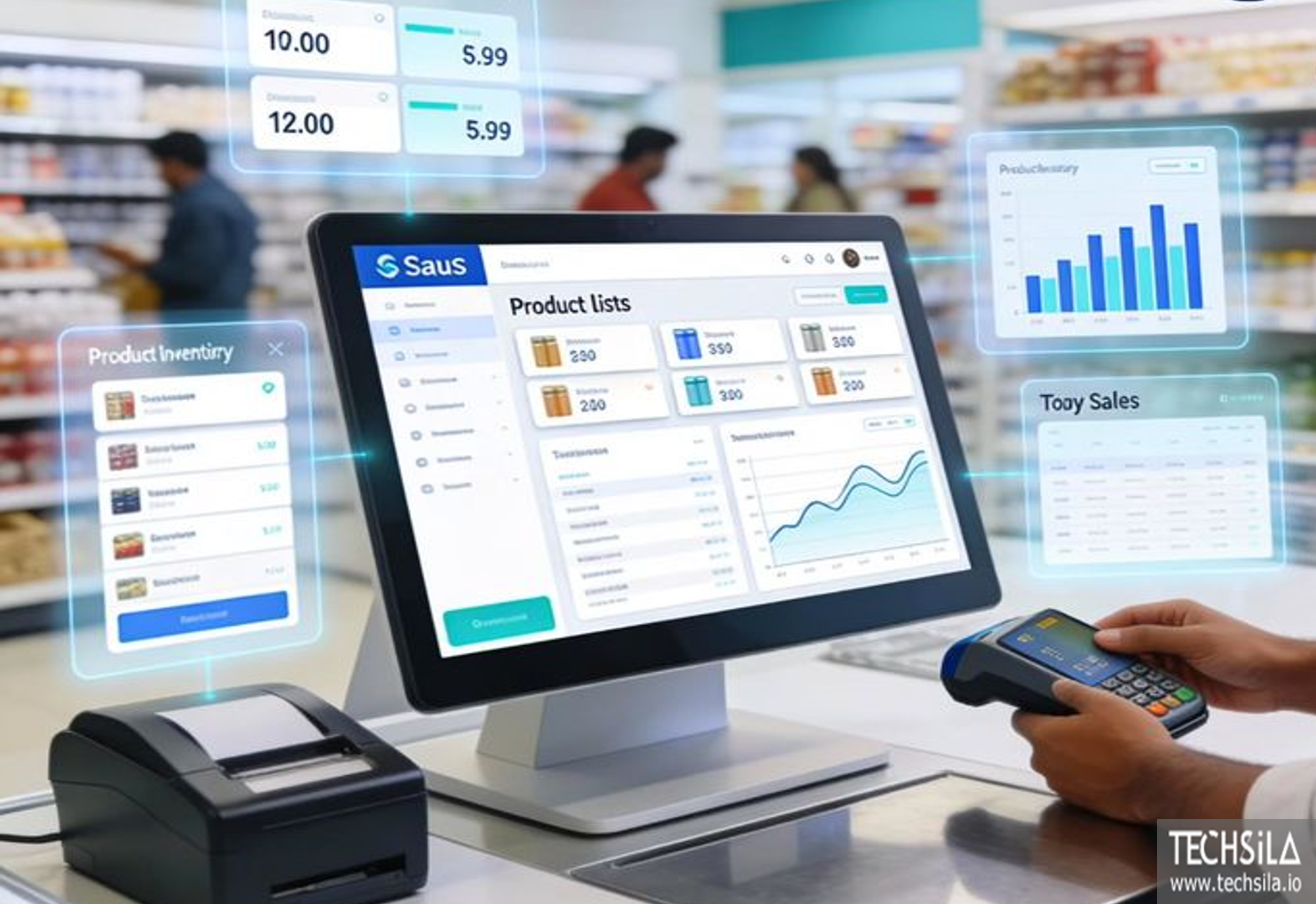
- Inventory management: Smart cameras detect empty shelves and monitor stock in real-time.
- Checkout-free stores: Computer vision tracks what customers pick up, enabling seamless billing.
- Customer behavior analytics: Understand foot traffic, dwell times, and product interactions to improve layouts and marketing strategies. Businesses looking to integrate these technologies can explore Techsila’s Computer Vision & Image Recognition services to implement scalable solutions.
Pro Tip: Use computer vision to personalize marketing campaigns. Even small insights, like which displays attract attention, can significantly boost sales.
According to a report by McKinsey, AI in retail can increase revenue by up to 10% and cut operational costs by 20%.
Logistics & Supply Chain: Efficiency on Autopilot
Computer vision applications are becoming indispensable in logistics, ensuring faster, safer, and more accurate operations.
Applications include:
- Automated package tracking: Cameras monitor packages and detect damage during transit.
- Fleet monitoring: AI tracks vehicles and predicts maintenance needs to avoid breakdowns.
- Warehouse safety compliance: Visual monitoring ensures safety protocols are followed.
DHL reported that AI-powered visual inspection systems can reduce shipment errors by up to 40% (DHL Innovation Report, 2025).
Agriculture: Precision Farming for Maximum Yield
Even farms are embracing computer vision applications to optimize crop production and monitor plant health.
Applications include:
- Crop monitoring: Drones with cameras detect signs of disease, pests, or water stress.
- Yield prediction: AI analyzes visual data to forecast production and optimize harvest timing.
- Precision spraying and fertilization: Targeted interventions reduce waste and costs.
Studies show AI-powered crop monitoring can increase yields by 20–25% (AgriFarming, 2025).
Other Emerging Sectors
While healthcare, retail, logistics, and agriculture are leading the charge, other sectors are quickly catching up:
- Manufacturing: Defect detection and predictive maintenance using AI cameras.
- Banking & Finance: Fraud detection via document and facial recognition.
- Education: Monitoring engagement and attendance in classrooms using computer vision.
Pro Tip: Don’t overlook smaller industries. Many niche businesses can benefit from simple computer vision applications, often with faster ROI than large-scale implementations.
Table comparing traditional processes vs. computer vision-enhanced processes for each industry:
| Industry | Traditional Process | With Computer Vision | Benefits |
|---|---|---|---|
| Healthcare | Manual image review | AI-assisted diagnostics | Faster, more accurate results |
| Retail | Manual stock checks | Smart shelf monitoring | Reduced stockouts |
| Logistics | Manual tracking | Automated package/fleet tracking | Lower errors, faster delivery |
| Agriculture | Visual crop inspection | Drone + AI monitoring | Higher yields, reduced waste |
This section illustrates real business value across industries, sets up internal CTAs for Techsila services, integrates credible statistics, and provides visual suggestions for engagement.
Benefits of Computer Vision Applications for Businesses
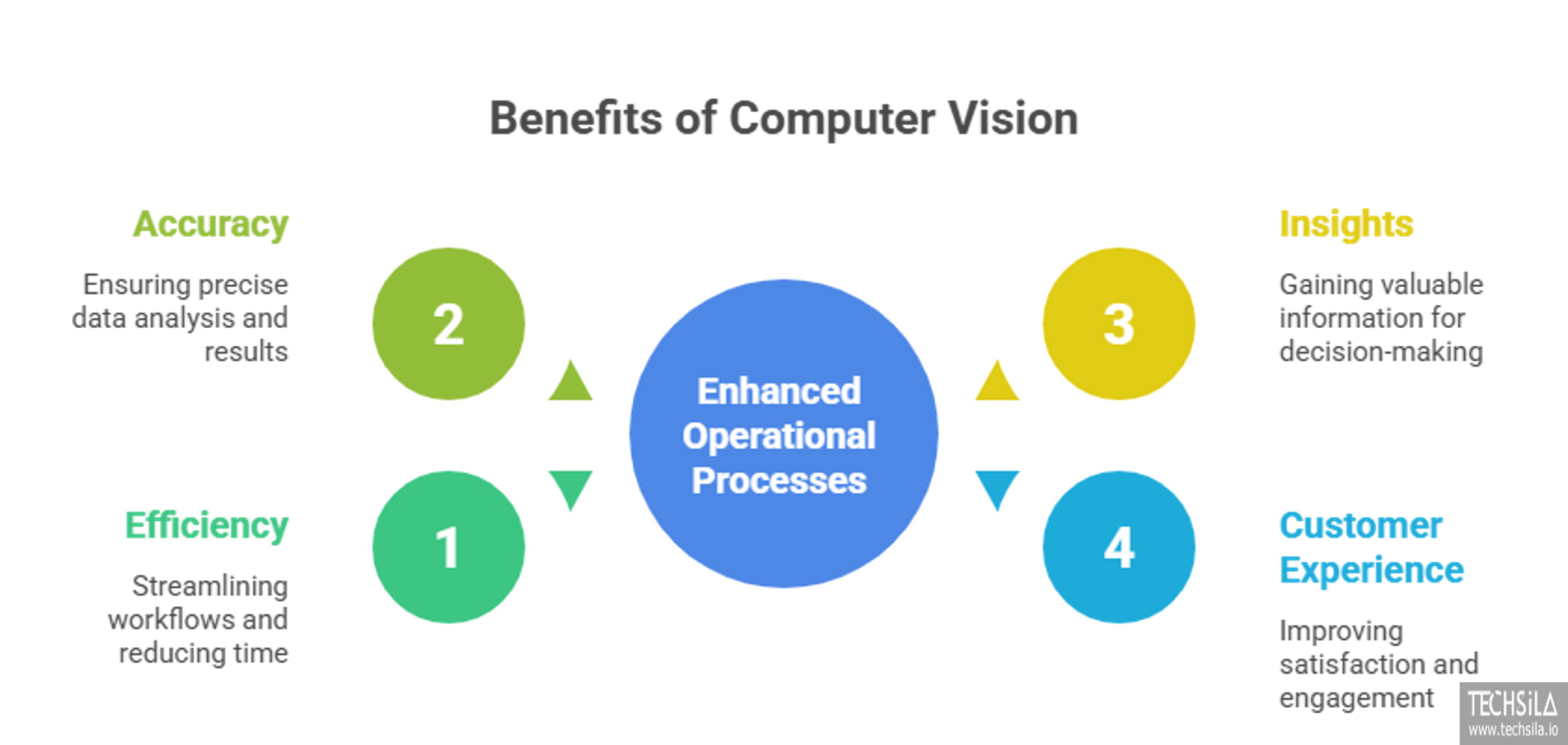
By now, it’s clear that computer vision applications are transforming industries across the board. But why should your business care? Beyond the “cool factor” of AI, the real value lies in measurable benefits that directly impact your bottom line.
1. Improved Operational Efficiency
Computer vision allows businesses to automate repetitive visual tasks that would normally require human oversight. This means faster processes, fewer mistakes, and more time for employees to focus on strategic work. For instance, in warehouses, AI-powered cameras can sort and track packages in real-time, something that would take humans hours to accomplish.
2. Reduced Errors and Enhanced Accuracy
Visual inspections, inventory checks, and monitoring processes are prone to human error. Computer vision applications minimize mistakes by detecting anomalies, inconsistencies, or safety hazards instantly. In manufacturing, this reduces defective products, while in healthcare, it increases diagnostic accuracy.
3. Data-Driven Decision Making
One of the most powerful aspects of computer vision is its ability to turn images and video into actionable insights. Retailers can analyze customer behavior to optimize store layouts, logistics companies can forecast delays before they occur, and farmers can predict crop yields based on real-time visual data. These insights allow for smarter, faster decisions.
4. Enhanced Customer Experience
Computer vision applications don’t just improve operations—they elevate the customer experience. From checkout-free stores to personalized product recommendations based on visual data, businesses can meet customers’ needs faster and more accurately than ever before.
Traditional vs Computer Vision-Enhanced Processes
| Process Area | Traditional Approach | Computer Vision Approach | Key Benefit |
|---|---|---|---|
| Inventory Management | Manual checks | AI-powered real-time tracking | Reduced stockouts and waste |
| Quality Control | Human inspection | Automated defect detection | Higher accuracy, fewer errors |
| Customer Analytics | Surveys & guesses | Visual behavior analysis | Smarter marketing and layouts |
| Safety Monitoring | Periodic human checks | Continuous AI monitoring | Safer workplaces |
If you’re ready to integrate computer vision and unlock these benefits, Techsila’s Computer Vision & Image Recognition services can help you implement tailored solutions that drive measurable business results. Additionally, businesses looking to combine computer vision with broader AI tools can explore Techsila’s AI Integration Solutions to ensure seamless implementation across their operations.
How to Implement Computer Vision in Your Business
So, you’re convinced of the value of computer vision applications, but how do you actually bring this technology into your business? The key is to approach implementation strategically, start small, measure impact, and scale thoughtfully. Here’s a step-by-step guide to help you get started.
Step 1: Identify High-Impact Areas
The first step is to look for processes in your business that rely heavily on visual data or repetitive manual inspections. Examples include:
- Quality control in manufacturing
- Inventory tracking in retail
- Patient monitoring in healthcare
- Crop analysis in agriculture
Pro Tip: Focus on tasks that are high-volume and error-prone. These areas usually provide the quickest return on investment when automated with computer vision.
Step 2: Choose the Right Tools
Next, select computer vision solutions that fit your business needs. This can include pre-built software, AI platforms, or custom solutions. Consider factors such as:
- Accuracy of the vision system
- Integration with your current software and hardware
- Scalability for future growth
For businesses looking for tailored solutions, Techsila’s Computer Vision & Image Recognition services provide end-to-end implementation, from planning to deployment.
Step 3: Start Small with a Pilot Project
Instead of overhauling your entire operation at once, run a pilot program. This helps you:
- Test how well the system works in real conditions
- Measure ROI and operational impact
- Identify challenges before full-scale rollout
Step 4: Integrate and Scale
Once your pilot proves successful, gradually scale the system across your operations. This can include:
- Expanding computer vision to additional departments or facilities
- Integrating insights into your broader AI and analytics platforms
- Training staff to leverage the technology effectively
For seamless integration across multiple business processes, Techsila’s AI Integration Solutions ensure your computer vision systems work hand-in-hand with existing tools and workflows.
Step 5: Monitor, Optimize, and Innovate
Computer vision isn’t a “set it and forget it” solution. Continuous monitoring and optimization are crucial to maintaining accuracy and efficiency. Regularly update algorithms, refine camera setups, and explore new applications as your business grows.
By following this roadmap, businesses can avoid common pitfalls, maximize ROI, and unlock the full potential of computer vision applications. Whether you’re in healthcare, retail, logistics, or agriculture, these steps provide a clear path from planning to full-scale adoption.
Future Trends in Computer Vision for 2026
The world of computer vision is evolving rapidly, and 2026 promises some exciting trends that businesses should be aware of. If you’re thinking about adopting these applications, understanding what’s next can help you stay ahead of the competition.
1. AI and Edge Computing for Faster Processing
Traditionally, computer vision relied on cloud processing, which could introduce latency. In 2026, more businesses are leveraging edge computing, where AI processes data locally on devices or cameras. This allows real-time decision-making, whether it’s spotting defects on a production line or monitoring crops in a field. According to a report from MIT Technology Review, edge-enabled computer vision is set to reduce response times by up to 70% in industrial applications.
2. Multi-Modal AI: Combining Vision with Language
Future computer vision systems aren’t just “seeing” anymore—they’re combining visual data with natural language processing (NLP) to provide richer insights. For example:
- Retail systems can analyze product placements and customer comments together to optimize marketing.
- Healthcare platforms can correlate imaging data with patient records to support faster diagnoses.
Pro Tip: Integrating multi-modal AI can significantly enhance decision-making and uncover patterns that would otherwise go unnoticed.
3. Smarter Industry-Specific Solutions
Expect more specialized computer vision applications tailored to specific sectors:
- Smart factories: AI cameras track assembly lines and predict machine failures.
- Autonomous logistics: Vehicles and drones use computer vision for navigation and package handling.
- Healthcare advancements: Real-time monitoring of patient vitals combined with imaging for early disease detection.
External research from Stanford AI Lab highlights that sector-specific models outperform general-purpose vision systems by up to 25%, making them a practical choice for businesses seeking maximum impact.
4. Sustainability and Resource Efficiency
Computer vision is increasingly used to optimize resource usage, whether reducing waste in manufacturing, managing energy consumption in smart buildings, or monitoring crops to minimize fertilizer use. Businesses can achieve both operational efficiency and sustainability goals simultaneously.
Conclusion
By now, it’s clear that computer vision applications are more than just a tech trend; they are a practical, high-impact tool for businesses across industries. From healthcare to retail, logistics to agriculture, computer vision is helping companies reduce errors, boost efficiency, enhance customer experiences, and make smarter decisions.
The key takeaway is that this technology is no longer limited to tech giants or AI labs. Even small and mid-sized businesses can implement computer vision solutions strategically and see measurable results in a short time. Whether it’s automating inventory checks, predicting equipment failures, analyzing customer behavior, or monitoring crops, the possibilities are vast, and the business value is real.
If you’re ready to bring the power of computer vision into your business, Techsila can help. Our Computer Vision & Image Recognition services provide tailored solutions to automate, analyze, and optimize your operations. For businesses looking to integrate computer vision with broader AI initiatives, our AI Integration Solutions ensure seamless implementation across your systems. Don’t just keep up, lead the way. Request a quote today and let Techsila help you unlock the full potential of computer vision applications in 2026 and beyond.
