

The Best SaaS tools 2026 are transforming how startups and small businesses operate — from automating workflows to enhancing team collaboration and driving revenue growth. With continuous innovation in cloud software, selecting the right SaaS stack is no longer just an operational decision; it’s a strategic advantage that directly impacts scalability, productivity, and customer experience.
In 2026, speed and adaptability define competitive businesses. Startups are launching faster, distributed teams are the norm, and customers expect seamless digital experiences. The Best SaaS tools 2026 empower companies to respond to these demands with agility — eliminating manual processes, reducing overhead costs, and enabling real-time data-driven decisions. Instead of investing heavily in infrastructure, businesses now leverage flexible, subscription-based platforms that scale as they grow.
The global SaaS market reflects this shift. With adoption projected to exceed $220 billion worldwide in 2026, cloud-based solutions have become the backbone of modern enterprises.¹ From CRM and marketing automation to cybersecurity and financial management, the Best SaaS tools 2026 offer integrated ecosystems that connect teams, streamline operations, and accelerate innovation.
But here’s the challenge: the SaaS landscape is more crowded than ever. Thousands of tools claim to boost efficiency or drive growth. Without a clear strategy, startups risk overspending on redundant subscriptions, struggling with integration issues, or adopting tools that fail to scale.
That’s why this guide is designed to help you cut through the noise. You’ll discover:
Carefully selected Best SaaS tools 2026 categorized by business function
- Practical comparisons to help you choose smarter
- Real-world use cases for startups and small businesses
- A step-by-step framework for building a scalable SaaS tech stack
Whether you’re launching your first product, optimizing internal workflows, or preparing for rapid expansion, choosing the Best SaaS tools 2026 can position your business for sustainable, long-term growth. Let’s explore the tools shaping the future of startups and small businesses this year.
Why the Best SaaS Tools in 2026 Matter More Than Ever
In 2026, SaaS has evolved from “nice to have” to mission-critical infrastructure for startups and small businesses. The best SaaS tools 2026 are:
- Cloud-native and scalable
- AI-driven for insights & automation
- Integration-first for seamless workflows
- Security and compliance ready
With remote and hybrid work now mainstream, teams depend on cloud software to coordinate asynchronously, analyze data in real time, and innovate faster than competitors. According to IDC, 70% of businesses plan to increase SaaS spending this year, emphasizing the strategic role SaaS plays across all business functions.
1. AI Is Redefining the Best SaaS Tools 2026
Artificial Intelligence is a defining factor in the Best SaaS tools 2026. Modern platforms embed AI to:
- Predict customer behavior
- Automate routine tasks
- Generate insights from large datasets
- Provide smart recommendations
This reduces manual workload and enables small businesses to make enterprise-level data decisions without hiring data science teams.
2. Cost Efficiency & Scalability
For startups, budget flexibility is crucial. The Best SaaS tools 2026 operate on subscription models that scale with usage, allowing businesses to:
- Avoid large upfront investments
- Add or remove users easily
- Upgrade features as needs grow
This pay-as-you-grow model ensures resources are aligned with business performance rather than locked into fixed infrastructure.
3. Security and Compliance Are Non-Negotiable
Cybersecurity threats and global privacy regulations (GDPR, CCPA, and others) make security essential. The Best SaaS tools 2026 include:
- Built-in encryption
- Role-based access controls
- Compliance certifications
- Audit trails
These features protect sensitive customer and business data, reducing legal and reputational risk.
4. Competitive Advantage Through Agility
Ultimately, the Best SaaS tools 2026 provide something invaluable: speed. Businesses can launch campaigns, onboard employees, deploy updates, and analyze performance in days instead of months.
Companies using modern SaaS stacks consistently outperform those relying on legacy systems because they can:
- Experiment faster
- Adapt to market changes
- Personalize customer experiences
- Scale operations without friction
The growing reliance on the Best SaaS tools 2026 shows that SaaS is no longer just software — it is the foundation of digital business strategy. Organizations that invest wisely in the right tools today are building systems that support innovation, resilience, and long-term growth.
How This Guide Works
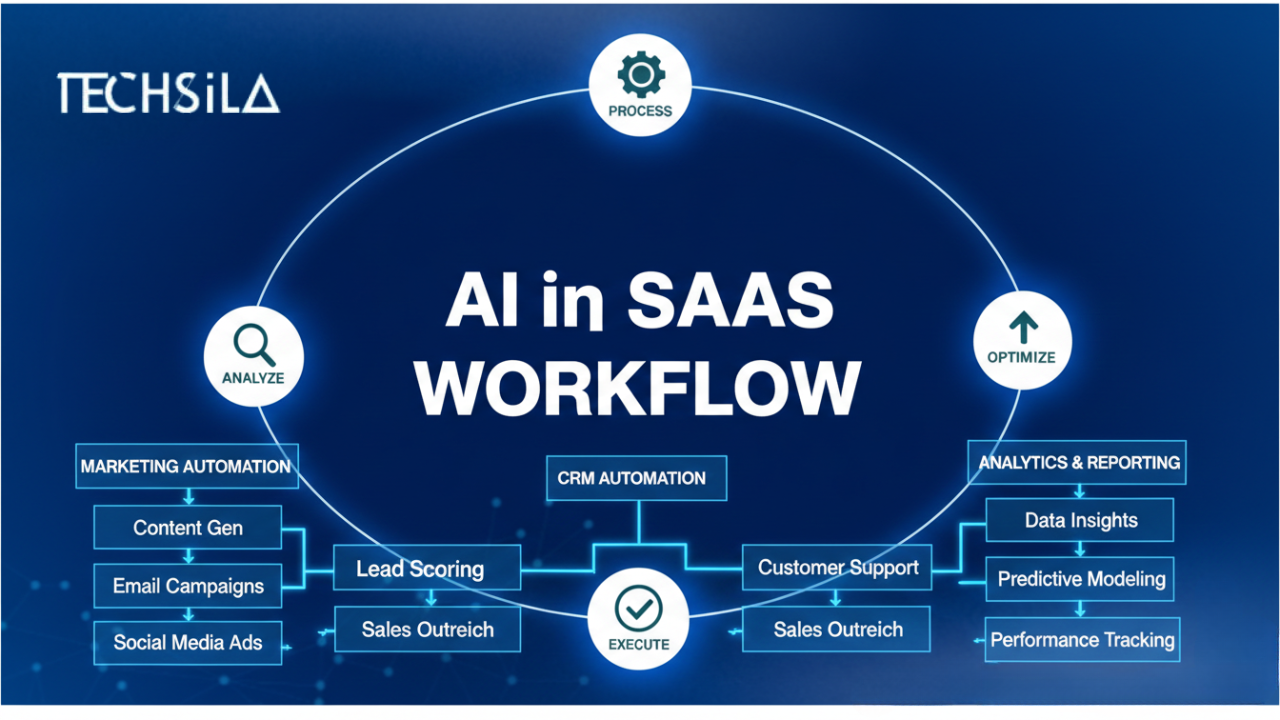
We break down the Best SaaS tools 2026 into functional categories so you can choose tools based on your business needs:
- Productivity & Collaboration
- CRM & Sales
- Marketing & Automation
- Finance & HR
- Security & Compliance
- Analytics & BI
- Development & DevOps
For each, you’ll find:
- Best tools with feature highlights
- Real use cases
- Pros & cons
- Suggested workflows
Best SaaS Tools 2026 — Productivity & Collaboration
Modern teams require tools that combine communication, documentation, and task management into one seamless experience.
1. Notion — All-in-One Workspace
Best for: Small teams building documentation + processes
Notion is one of the Best SaaS tools 2026 in the productivity space because it centralizes notes, docs, knowledge base, and project boards. It replaces multiple apps — wiki tools, docs, and basic project boards — with a modular system that adapts to your workflow.
Key Features
- Custom databases
- Integrated kanban & calendar views
- Real-time collaboration
When to Use It:
- Building company playbooks
- Managing cross-functional projects
2. Slack — Real-Time Team Messaging
Best for: Real-time team communication
Slack remains a top choice for remote and hybrid teams. Its channels, searchable history, and integrations with tools like GitHub, Google Workspace, Trello, and CRM platforms make it indispensable.
Why It’s Among the Best SaaS Tools 2026
- Blocks email overload
- Reduces meetings with asynchronous collaboration
- Connects to hundreds of third-party apps
Best SaaS Tools 2026 for CRM & Sales
Managing customer relationships is core to revenue growth. The right CRM helps teams track leads, automate follow-ups, and analyze sales performance.
1.HubSpot CRM — Free & Scalable
Best for: Startups with limited budgets
HubSpot CRM combines contact management, deal tracking, and basic automation — making it one of the Best SaaS tools 2026 for early revenue teams. You can upgrade modularly into Marketing, Sales, or Service Hubs as you scale.
Standout Features
- Email templates & tracking
- Lead scoring
- Reporting dashboards
- Salesforce — Enterprise-Grade CRM
Best for: Growth-oriented teams with structured pipelines
Salesforce remains a market leader with highly customizable pipelines, automation, and reporting. Though more complex than entry-level CRM tools, Salesforce is built for long-term sales growth.
Ideal When:
- Your sales process involves multi-stage pipelines
- You need advanced automation & forecasts
Best SaaS Tools 2026 for Marketing & Automation
Marketing teams thrive when they can automate campaigns, segment audiences, and measure ROI without manual overhead.
1. Mailchimp — Email & Audience Marketing
Mailchimp has evolved beyond email to include audience segmentation, landing pages, and multichannel campaigns. It’s one of the Best SaaS tools 2026 for small businesses starting with digital marketing.
- Features
- Email builder
- Behavioral segmentation
- Analytics & A/B testing
2. Zapier — No-Code Automation
Zapier connects over 6,000+ apps, making it a go-to choice for workflow automation without coding. By automating repeat tasks (like syncing contacts between CRM and email tools), Zapier saves valuable time.
Example Use:
Trigger automatic Slack notifications when new leads enter CRM
Best SaaS Tools 2026 — Finance & HR
Running a business means managing money and people efficiently.
3. QuickBooks — Accounting & Invoicing
QuickBooks is one of the most trusted finance platforms for SMBs. It handles:
Invoicing, receipts, bills
Financial reporting
Tax prep
Ideal for: Freelancers, service businesses, and growing teams
4. Gusto — Payroll & HR
Gusto simplifies employee onboarding, benefits, and payroll compliance. With distributed workforces, a platform like Gusto helps keep HR processes consistent and compliant with local laws.
Best SaaS Tools 2026 — Security & Compliance
Security is not optional. As cyber threats evolve, the best SaaS tools 2026 include built-in protections and governance controls.
1. Password — Password Security
Password centralizes team credentials with enterprise-grade encryption. It’s essential for remote teams to securely share and manage access.
Why It’s Crucial:
Eliminates password sharing risk
Provides centralized audit logs
2. Cloud flare — Network & App Security
Cloud flare protects your digital assets with:
DDoS mitigation
Firewall rules
Global CDN acceleration
For sites and APIs, combining performance and security makes Cloud flare one of the Best SaaS tools 2026 in its class.
Best SaaS Tools 2026 — Analytics & Business Intelligence
Data informs smarter decisions. SaaS analytics tools help visualize performance across categories.
-
Google Analytics 4 — Web Analytics
Despite recent changes, Google Analytics 4 remains a core tool for website and app measurement.
2. Tableau Cloud — Visual BI
For data-driven teams that need interactive, shareable dashboards without on-premise infrastructure, Tableau Cloud is a leader in cloud BI.
Best SaaS Tools 2026 for Developers & DevOps
Developer teams need agile, collaborative platforms that support continuous delivery.
1. GitHub — Source Code & Collaboration
GitHub stays at the core of software development for collaboration, version control, and workflow automation.
Best Practices
Use GitHub Actions for CI/CD
Integrate code reviews with automation
2. Jira — Project Tracking
Jira remains one of the Best SaaS tools 2026 for software teams needing robust, customizable agile project management.
How to Choose the Right SaaS Tools for Your Startup
Selecting the Best SaaS tools 2026 shouldn’t be guesswork. Use this structured decision process:
Step-by-Step Evaluation
- Define clear business goals – revenue targets, customer growth, productivity ROI
- Map workflows and gaps – where do bottlenecks exist?
- Check integration requirements – avoid siloed tools
- Use trials before buying – test with real data
- Assess total cost of ownership – subscription, training, support
- Measure ROI – track time savings, revenue lift, or cost reduced
SaaS Stack Blueprint — Example for Startups
Here’s a sample SaaS stack built for a lean startup:
Security
| Function | Tool | Why It’s Included |
| Collaboration | Notion + Slack | Flexible docs + real-time comms |
| CRM | HubSpot | Free, scalable CRM |
| Marketing | Mailchimp + Zapier | Email + automation |
| Finance | QuickBooks | Accounting engine |
| HR | Gusto | Payroll & compliance |
| Security | 1Password + Cloudflare | Credential + network security |
| Analytics | GA4 | User insights |
| DevOps | GitHub + Jira | Code + agile workflows |
Common Pitfalls When Building a SaaS Stack
Even the Best SaaS tools 2026 can underperform if implemented poorly. Avoid:
- Overlapping subscriptions — e.g., tools that do the same thing
- Ignoring onboarding/training — low adoption kills ROI
- Underestimating integrations — missing connectors create silos
SaaS Trends to Watch in 2026
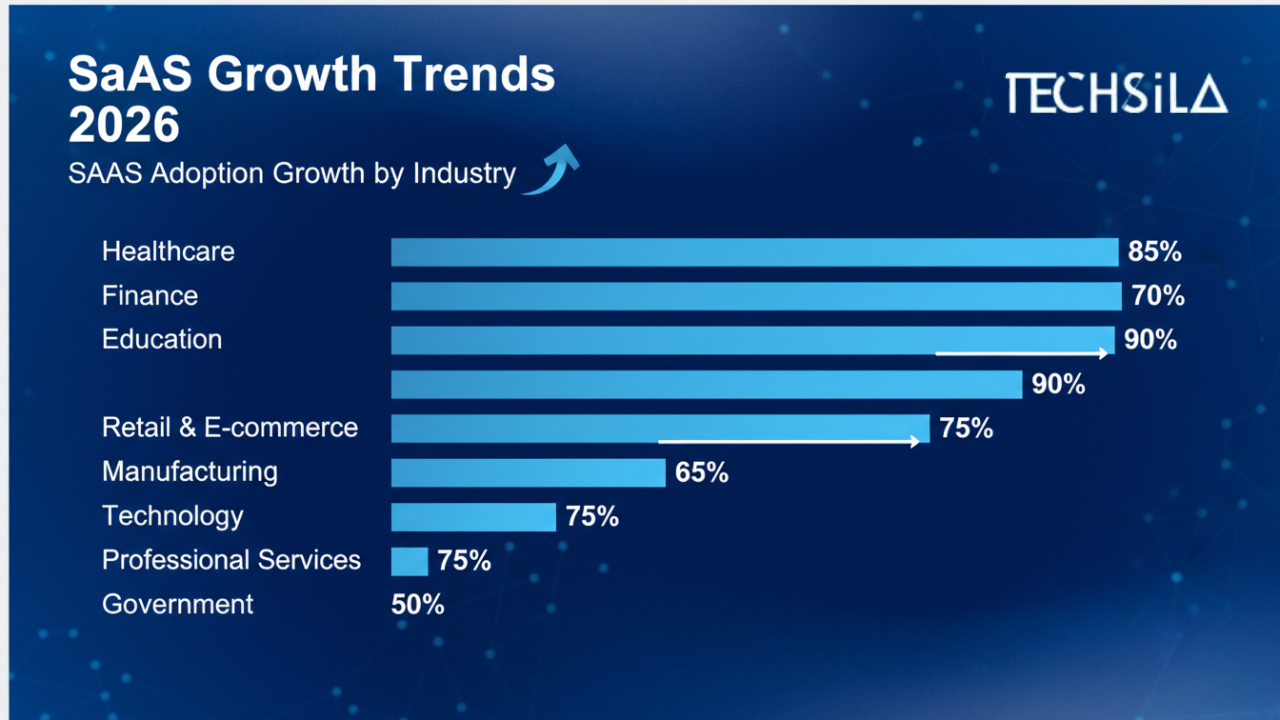
Understanding trends helps you future-proof your SaaS choices.
- AI Integration Across Tools
AI assistants, predictive analytics, and workflow automation are now standard features in enterprise SaaS.
McKinsey reports that 70% of companies are increasing AI investment.
- API-First & Headless Architecture
Developers demand SaaS platforms that offer flexible APIs for custom workflows and integrations.
- Emphasis on Security & Privacy
With rising data privacy laws (GDPR, CCPA, PDPA), SaaS vendors that bake in compliance save businesses time and risk.
Conclusion — Build Growth With the Best SaaS Tools 2026
Choosing the Best SaaS tools 2026 for your startup or small business is not just about adopting trendy platforms — it’s about building a smart, scalable digital ecosystem that evolves with your company. The right SaaS stack aligns with your goals, supports your workflows, and enables your team to operate faster, smarter, and more efficiently.
In today’s competitive environment, technology is no longer a support function — it is a growth engine. The Best SaaS tools 2026 help businesses:
- Automate repetitive and time-consuming processes
- Improve collaboration across remote and hybrid teams
- Turn raw data into actionable insights
- Enhance customer experiences through personalization
- Maintain strong security and compliance standards
When your tools integrate seamlessly, your organization moves from reactive to proactive. Instead of chasing problems, you focus on innovation, strategy, and delivering value to customers. This shift is what separates fast-growing companies from those that struggle with operational bottlenecks.
However, building the right SaaS ecosystem requires more than downloading popular apps. It demands strategic selection, integration planning, workflow optimization, and scalability considerations. A mismatched stack can lead to wasted subscriptions, disconnected systems, and reduced productivity — the exact opposite of what SaaS promises.
That’s where expert guidance makes a measurable difference.
If you need help evaluating your existing tools, designing a future-ready SaaS architecture, or developing custom software that connects everything together, Techsila specializes in building technology solutions tailored for modern businesses. From software development and system integrations to digital transformation strategies, the focus is always on helping startups and small businesses turn technology into a competitive advantage.
By partnering with experienced technology experts, you ensure your Best SaaS tools 2026 strategy is not only efficient today but scalable for tomorrow’s growth.
Many growing businesses use a hybrid approach — combining top SaaS platforms with custom-built solutions to create a fully optimized, scalable ecosystem.
You can also explore more about scalable software solutions, digital product development, and SaaS strategy on Techsila’s main platform:
“Investing in the right SaaS tools is investing in predictability, efficiency, and long-term growth.”
👉 Ready to optimize your SaaS stack and unlock smarter growth? Request a personalized quote from Techsila:
FAQs
1.What counts as a SaaS tool in 2026?
A modern SaaS tool is cloud-hosted, subscription-based, regularly updated, and designed for team collaboration.
2. Do I need paid SaaS tools from day one?
Not always. Many best SaaS tools 2026 offer freemium tiers or ROI-based pricing that scales with usage.
4. How do I know if I’m using the Best SaaS tools 2026 for my business?
To determine whether you’re using the Best SaaS tools 2026, evaluate performance against three key factors: efficiency, scalability, and integration. Your tools should automate repetitive tasks, integrate seamlessly with other platforms, and scale as your team or customer base grows. If you’re experiencing workflow bottlenecks, duplicate data entry, or limited reporting capabilities, it may be time to reassess your SaaS stack.
A quarterly review of usage, ROI, and team adoption rates can help ensure your tools remain aligned with business goals.
5. Can the Best SaaS tools 2026 replace custom software development?
The Best SaaS tools 2026 can handle most standard business functions like CRM, marketing automation, accounting, and collaboration. However, if your company has unique workflows, industry-specific requirements, or complex integrations, custom software development may be necessary to bridge gaps between platforms.
