

The SaaS landscape is evolving faster than ever, and AI features for SaaS 2026 are no longer just a “nice-to-have.” They are the difference between a product that delights users and one that struggles to retain them. If your SaaS platform doesn’t include the right AI features for SaaS 2026, you risk frustrating users with slow, generic experiences while competitors deliver personalized, predictive, and automated solutions.
Think about it: today’s SaaS users expect products that anticipate their needs, automate repetitive tasks, and provide actionable insights without any extra effort. AI features for SaaS 2026 enable platforms to analyze user behavior in real-time, recommend the next best actions, detect anomalies before they become problems, and even optimize pricing, workflows, and user engagement automatically. Simply put, these AI features transform your software from a tool into a smart assistant that your users rely on daily.
However, not all AI is created equal. Many SaaS companies add AI features without a clear strategy, creating flashy dashboards or chatbots that rarely deliver real value. The key is implementing AI features for SaaS 2026 that are purposeful, measurable, and directly aligned with business goals, whether that’s increasing retention, boosting revenue, or scaling operations.
Investing in the right AI features for SaaS 2026 isn’t just about technology; it’s a strategic decision that affects product adoption, user satisfaction, and long-term growth. By understanding which AI features truly matter, SaaS businesses can stay competitive, exceed user expectations, and future-proof their products for 2026 and beyond.
Looking for expert guidance to implement these AI features effectively? Techsila’s AI-powered SaaS solutions help businesses design, integrate, and scale intelligent features that drive measurable results.
Personalized User Experiences: The Foundation of Competitive SaaS
Personalization is no longer optional; it’s a baseline expectation for any SaaS product that wants to stay competitive in 2026. Users now expect platforms to understand their preferences, recommend relevant content, and even anticipate their next steps. This is why personalization is one of the most crucial AI features for SaaS 2026.
Imagine logging into a SaaS tool where every dashboard, notification, and workflow is tailored specifically to your habits. That’s not just convenient, it drives engagement, retention, and ultimately, revenue. Platforms that implement AI-driven personalization can adapt to user behavior in real-time, analyze large datasets, and deliver hyper-targeted recommendations.
Several personalization strategies powered by AI are gaining traction:
-
Behavioral Analytics: AI monitors how users interact with your platform and adjusts recommendations accordingly.
-
Dynamic Dashboards: Users see only the most relevant data and tools for their role, improving productivity.
-
Predictive Suggestions: AI anticipates what a user might need next, whether it’s a report, a task, or a learning module.
The impact of these AI features for SaaS 2026 is measurable. According to a report by McKinsey
Businesses that integrate AI-driven personalization see up to 20% higher customer satisfaction and 15% increased revenue.
For SaaS companies looking to implement these advanced personalization features efficiently, working with experienced partners can make a huge difference. In 2026, generic experiences won’t cut it. AI features for SaaS 2026 that deliver personalized interactions are essential for staying competitive and building long-term customer loyalty.
AI-Powered Predictive Analytics & Insights
One of the most powerful shifts happening in SaaS products is the move from reactive decision-making to predictive intelligence. This is exactly why predictive analytics stands out as one of the most important AI features for SaaS 2026. Instead of looking at what already happened, SaaS platforms are expected to anticipate what will happen next and help users act before problems or opportunities arise.
At its core, AI-powered predictive analytics uses historical data, real-time user behavior, and machine learning models to forecast outcomes. For SaaS businesses, this means clearer visibility into churn risk, feature adoption, revenue trends, and customer lifetime value, all without manual analysis.
How Predictive Analytics Transforms SaaS Products
Modern SaaS platforms generate massive volumes of data every day. The challenge isn’t data availability, it’s making sense of it. Predictive analytics turns raw data into actionable insights, making it one of the most valuable AI features for SaaS 2026.
Here’s how it delivers real impact:
1. Churn Prediction & Retention Intelligence
AI models can identify subtle behavior patterns that signal churn long before a user cancels. Reduced logins, feature abandonment, and slower response times. AI connects these signals and flags high-risk users automatically.
This allows SaaS companies to:
-
Trigger retention campaigns at the right time
-
Offer targeted discounts or feature guidance
-
Proactively engage users before revenue is lost
Instead of guessing, teams act with precision, a major advantage in competitive SaaS markets.
2. Usage & Demand Forecasting
Predictive analytics also helps SaaS platforms anticipate how users will interact with the product in the future. This includes:
-
Which features will gain traction
-
When usage spikes are likely to occur
-
Which user segments will expand fastest
These insights help product teams prioritize roadmaps and infrastructure teams scale resources efficiently, reducing both downtime and unnecessary costs.
3. Revenue & Growth Forecasting
Revenue forecasting is another area where AI features for SaaS 2026 make a measurable difference. Predictive models analyze subscription patterns, upgrades, downgrades, and renewals to estimate future revenue with greater accuracy.
This supports:
-
Smarter pricing strategies
-
Better financial planning
-
Data-backed investor reporting
For SaaS founders and leaders, this level of clarity is no longer optional; it’s expected.
Why Predictive Analytics Is a Competitive Advantage in 2026
Predictive analytics is not just about insights — it’s about speed. SaaS companies that act faster win faster. Platforms that integrate these AI features for SaaS 2026 empower users to make decisions instantly, without waiting for reports or analysts.
According to Forbes, AI-driven predictive analytics is transforming how businesses forecast growth, reduce churn, and optimize customer engagement. As user expectations rise, SaaS products without predictive intelligence will feel outdated — regardless of how good their UI or core functionality may be.
Implementing Predictive Analytics Without Overengineering
While predictive analytics sounds complex, it doesn’t have to be overwhelming. The key is working with teams that understand both AI implementation and SaaS architecture.
If you’re planning to embed predictive insights into your platform, explore Techsila’s AI-powered SaaS solutions. Their team helps SaaS companies implement scalable, secure, and production-ready AI features without unnecessary complexity or inflated costs.
Why This Matters for the Future of SaaS
By 2026, SaaS users won’t just ask “What happened?” They’ll expect answers to “What’s going to happen next, and what should I do?” That expectation makes predictive analytics one of the most essential AI features for SaaS 2026. Platforms that deliver forward-looking insights will retain users longer, scale faster, and outperform competitors who rely on static dashboards and manual analysis.
AI-Driven Automation for Smarter Workflows & Operations
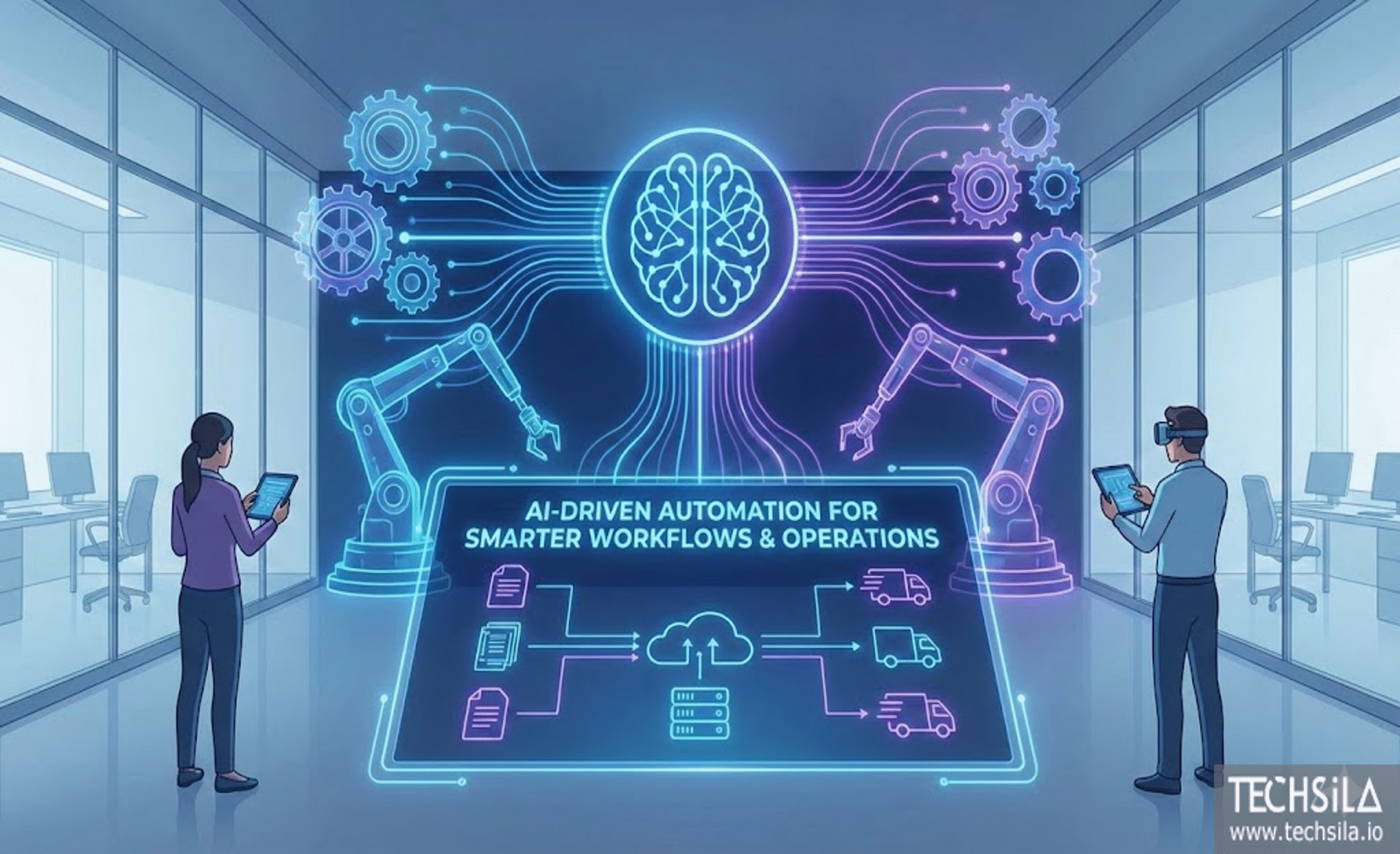
As SaaS products scale, complexity grows fast. Manual processes that worked for 100 users break completely at 10,000. This is where AI-driven automation becomes one of the most critical AI features for SaaS 2026. It’s no longer just about saving time, it’s about building systems that run intelligently, consistently, and at scale.
AI-powered automation allows SaaS platforms to eliminate repetitive tasks, reduce human error, and optimize workflows in real time. Instead of relying on rigid, rule-based automation, AI learns from user behavior, system performance, and historical data to continuously improve processes.
How AI Automation Elevates SaaS Products
Unlike traditional automation, AI-driven workflows adapt as conditions change. This makes automation one of the most practical and revenue-impacting AI features for SaaS 2026.
1. Intelligent Workflow Orchestration
AI can automatically route tasks, approvals, and processes based on context, not static rules. For example:
-
Support tickets are assigned to the most suitable agent based on urgency and expertise
-
Internal approvals are prioritized using AI-detected risk or value
-
System alerts trigger only when truly needed, reducing noise
This leads to faster resolutions and a smoother user experience.
2. Automated Customer Support Operations
Customer support is one of the first areas where AI automation delivers visible results. AI can:
-
-
Categorize and prioritize tickets
-
Auto-resolve repetitive queries
-
Escalate only complex issues to human agents
-
This reduces support workload while improving response times a win for both customers and internal teams.
According to McKinsey, businesses that adopt AI-driven automation can reduce operational costs by up to 30% while improving service quality:
This level of efficiency is exactly why automation is considered a foundational AI feature for SaaS 2026.
3. Backend Process Optimization
AI automation isn’t limited to customer-facing workflows. On the backend, it improves:
-
Deployment pipelines
-
Resource allocation
-
Error detection and system monitoring
AI models detect anomalies early, preventing outages before they impact users. For SaaS platforms with global users, this proactive stability is essential.
Why AI Automation Is a Must-Have in 2026
Modern SaaS users expect instant results. They don’t care how complex your operations are; they care that things work seamlessly. AI-driven automation ensures that growth doesn’t come at the cost of performance or reliability.
By integrating automation as one of the core AI features for SaaS 2026, SaaS companies can:
-
Scale without linear increases in operational costs
-
Maintain consistent service quality
-
Free teams to focus on innovation instead of maintenance
Scaling Automation with the Right Development Partner
Implementing AI automation requires careful planning, especially when integrating with existing SaaS architectures. Choosing the right development approach is critical to avoid bloated systems or security risks.
If you’re planning to scale your SaaS platform efficiently, build a scalable Offshore Development Center with Techsila. Their dedicated teams specialize in implementing AI-driven automation and enterprise-grade SaaS workflows optimized for long-term growth.
The Competitive Edge of AI-Driven Operations
In 2026, SaaS companies won’t compete solely on features; instead, they will compete on efficiency, reliability, and speed. Platforms that embed intelligent automation will move faster, respond quicker, and operate leaner than those relying on manual or outdated systems.
That’s why AI-driven automation stands out as one of the most impactful AI features for SaaS 2026, enabling SaaS businesses to grow smarter, not harder.
AI-Powered Personalization & Next-Level User Experience
In 2026, SaaS users no longer compare your product only with direct competitors; they compare it with the best digital experiences they’ve ever had. That’s why personalization has become one of the most decisive AI features for SaaS 2026. A one-size-fits-all product experience simply doesn’t work anymore.
AI-powered personalization allows SaaS platforms to dynamically adapt interfaces, content, and feature recommendations based on each user’s behavior, preferences, and usage patterns. The result? Users feel understood, guided, and valued — not overwhelmed.
Why Personalization Is No Longer Optional
Modern SaaS platforms serve diverse user roles, industries, and goals. Without personalization, users are forced to navigate unnecessary features and irrelevant workflows. AI changes this completely by learning how each user interacts with the product and adjusting the experience in real time.
This makes personalization one of the most impactful AI features for SaaS 2026, especially for:
-
Reducing onboarding friction
-
Increasing feature adoption
-
Improving user satisfaction and retention
How AI Personalization Works in SaaS Products
1. Smart Onboarding Experiences
First impressions matter. AI analyzes user inputs, role selections, and early actions to personalize onboarding flows. Instead of showing every feature at once, AI introduces only what’s relevant step by step.
This helps users reach their “aha moment” faster, increasing activation rates significantly.
2. Personalized Dashboards & Feature Recommendations
AI-powered systems continuously learn from user behavior and usage frequency. Based on this data, SaaS platforms can:
-
Highlight the most relevant features
-
Recommend tools users haven’t explored yet
-
Rearrange dashboards to match individual workflows
These tailored experiences make the platform feel intuitive — a core reason personalization is one of the most valued AI features for SaaS 2026.
3. Context-Aware In-App Guidance
AI can deliver guidance exactly when users need it. Instead of generic tooltips, AI provides:
-
Contextual tips
-
Behavior-based prompts
-
Real-time suggestions
This reduces support tickets while empowering users to solve problems independently.
Business Impact of AI-Driven Personalization
From a business perspective, personalization directly impacts revenue and retention. When users see value faster and feel confident using a product, they stay longer, and they upgrade more often.
By embedding personalization as a core AI feature for SaaS 2026, SaaS companies can:
-
Increase engagement metrics
-
Reduce churn rates
-
Strengthen long-term customer relationships
More importantly, personalization creates emotional loyalty, something features alone can’t achieve.
The UX Advantage in a Competitive SaaS Market
As SaaS markets become more crowded, user experience becomes the real differentiator. AI-powered personalization turns complexity into clarity, helping users feel in control rather than confused.
In 2026, SaaS products that fail to personalize will feel generic and outdated. Those that embrace AI-driven experiences will set new standards for usability, efficiency, and satisfaction, reinforcing why personalization remains one of the most essential AI features for SaaS 2026.
AI-Powered Security, Fraud Detection & Compliance
As SaaS platforms grow smarter and more connected, security risks grow just as fast. In fact, security is no longer just a backend concern; it’s a core product expectation. This is why AI-driven security and fraud detection have become one of the most non-negotiable AI features for SaaS 2026.
Modern SaaS products handle massive volumes of sensitive data: customer information, payment details, behavioral data, and proprietary business insights. Traditional, rule-based security systems can’t keep up with evolving cyber threats. AI changes the game by identifying risks in real time, often before damage occurs.
Why Traditional Security Is No Longer Enough
Static security rules work only for known threats. But in 2026, SaaS platforms face:
-
Zero-day attacks
-
Insider threats
-
Sophisticated fraud patterns
-
Automated bot attacks
AI-powered security systems continuously learn from user behavior, traffic patterns, and historical incidents, making them far more effective than legacy approaches. That’s exactly why security has become one of the most essential AI features for SaaS 2026.
How AI Enhances SaaS Security
1. Real-Time Threat Detection
AI models monitor system activity 24/7 and detect anomalies instantly. Unusual login behavior, abnormal API usage, or suspicious data access patterns are flagged in real time, often before a breach occurs.
This proactive approach significantly reduces response time and minimizes potential damage.
2. Intelligent Fraud Detection
AI excels at identifying subtle fraud signals that humans and rule-based systems often miss. For SaaS platforms offering subscriptions, payments, or usage-based billing, AI can:
-
Detect fake accounts
-
Prevent payment fraud
-
Identify abuse of free trials or promotions
Fraud prevention is no longer reactive; it’s predictive, making it a key AI feature for SaaS 2026.
3. Automated Compliance Monitoring
Compliance with regulations like GDPR, SOC 2, HIPAA, and ISO standards is critical for SaaS growth. AI simplifies compliance by:
-
Continuously monitoring policy adherence
-
Flagging violations automatically
-
Generating audit-ready reports
This reduces legal risk while saving countless hours of manual work.
The Real Cost of Ignoring AI Security
Security breaches are not just technical failures; they are business disasters. According to IBM’s Cost of a Data Breach Report, the average global cost of a data breach continues to rise, severely impacting customer trust and revenue:
In 2026, SaaS companies that fail to implement AI-driven security won’t just risk breaches they’ll lose credibility in the market. That’s why security-focused AI is now considered a foundational AI feature for SaaS 2026.
Building Secure SaaS Products the Right Way
Implementing AI-powered security requires expertise in both AI systems and SaaS architecture. Poorly implemented security can create vulnerabilities instead of preventing them.
If you’re planning to build or upgrade a secure SaaS platform, request a custom SaaS & AI security consultation with Techsila. Their experts design AI-driven security layers that scale with your product without compromising performance or user experience.
Security as a Competitive Advantage
In 2026, security won’t just be about protection; it will be a selling point. SaaS buyers will actively choose platforms that demonstrate strong, AI-powered security capabilities.
That’s why advanced threat detection, fraud prevention, and compliance automation are no longer optional; they are must-have AI features for SaaS 2026, defining which platforms earn trust and which ones fall behind.
AI-Powered Decision Intelligence & Smart Recommendations
As SaaS platforms mature, the real value shifts from data availability to decision clarity. This is why decision intelligence has emerged as one of the most strategic AI features for SaaS 2026. SaaS users don’t just want dashboards; they want guidance on what actions to take next.
AI-powered decision intelligence combines machine learning, predictive analytics, and real-time data processing to deliver smart, contextual recommendations. Instead of overwhelming users with numbers, AI translates insights into clear, actionable suggestions.
From Insights to Intelligent Actions
Traditional analytics tells users what happened. Decision intelligence tells them what to do about it. That distinction makes this one of the most impactful AI features for SaaS 2026, especially for non-technical users and decision-makers.
Examples include:
-
Suggesting optimal pricing changes based on usage patterns
-
Recommending workflow optimizations to improve efficiency
-
Alerting teams to risks before KPIs decline
This transforms SaaS platforms from passive tools into active business partners.
How Smart Recommendations Improve User Outcomes
1. Context-Aware Recommendations
AI systems analyze user behavior, historical data, and current context to deliver recommendations that are:
-
Relevant
-
Timely
-
Easy to act on
Instead of generic advice, users receive personalized insights that align with their goals, reinforcing trust and long-term engagement.
2. Reduced Cognitive Load
Decision fatigue is real. AI-powered recommendations reduce complexity by highlighting only what matters. This improves user confidence and accelerates decision-making, a major reason decision intelligence is considered a must-have among AI features for SaaS 2026.
3. Continuous Learning & Improvement
AI models learn from user actions and outcomes. If a recommendation works, it’s reinforced. If it doesn’t, the system adapts. Over time, recommendations become increasingly accurate and valuable.
Business Impact of Decision Intelligence
From a business perspective, decision intelligence delivers measurable ROI. SaaS companies benefit from:
-
Faster customer decision cycles
-
Higher feature adoption rates
-
Stronger user trust and satisfaction
When users consistently see value from AI-driven guidance, they’re more likely to stay, upgrade, and advocate for the product.
Why Decision Intelligence Defines SaaS Leadership in 2026
In crowded SaaS markets, features alone are not enough. Leadership comes from enabling users to succeed faster. Decision intelligence bridges the gap between data and outcomes, positioning it as one of the defining AI features for SaaS 2026.
By embedding smart recommendations into core workflows, SaaS platforms evolve from tools into advisors, setting a new standard for what “intelligent software” truly means.
AI is no longer an optional enhancement for SaaS platforms; it’s a core driver of growth, efficiency, and competitiveness. The right AI features not only improve user experience but also help businesses scale faster, optimize workflows, and stay ahead of competitors in a crowded market. From predictive analytics and personalized recommendations to automated workflows and decision intelligence, each AI capability plays a pivotal role in defining a SaaS product’s value.
Understanding which AI features every SaaS product must have in 2026 is essential for product leaders, founders, and development teams. Implementing these features strategically can reduce churn, increase engagement, and accelerate revenue growth. At the same time, leveraging the right development and AI integration partner ensures these features are delivered efficiently, securely, and with measurable ROI.
If your SaaS business is ready to integrate these AI features and build a product that truly stands out, don’t leave it to guesswork. Get started with expert guidance today by requesting a quote from Techsila. Their team can help you prioritize the most impactful AI features, streamline development, and ensure your SaaS product is built to compete in 2026 and beyond.
By strategically embedding AI, your SaaS platform doesn’t just keep up, it leads. Understanding these AI features every SaaS product must have in 2026 ensures your investment translates into growth, customer satisfaction, and long-term success.
FAQs
1. What are the must-have AI features for SaaS in 2026?
Predictive analytics, personalization, automated workflows, NLP chatbots, and intelligent reporting dashboards.
2. How does AI help SaaS scale faster?
By automating tasks, providing predictive insights, and personalizing user experiences at scale.
3. Do all SaaS products need AI in 2026?
Not all, but key AI features improve engagement, retention, and competitiveness.
4. How much does AI integration cost in SaaS?
Costs vary by complexity basic AI is affordable, advanced predictive models require higher investment.
5. How to choose the right AI features for my SaaS product?
Focus on features that solve key user problems and align with business goals; expert guidance helps prioritize effectively.
